Villa Csonka by Hotel Privo – what is it? A stay in a historic Art Nouveau villa in the heart of Transylvania
Villa Csonka is not just a beautiful place to stay in Târgu Mureș, but also a fascinating story of a historic villa that has been given a second life through a combination of historic architecture and a modern hotel.
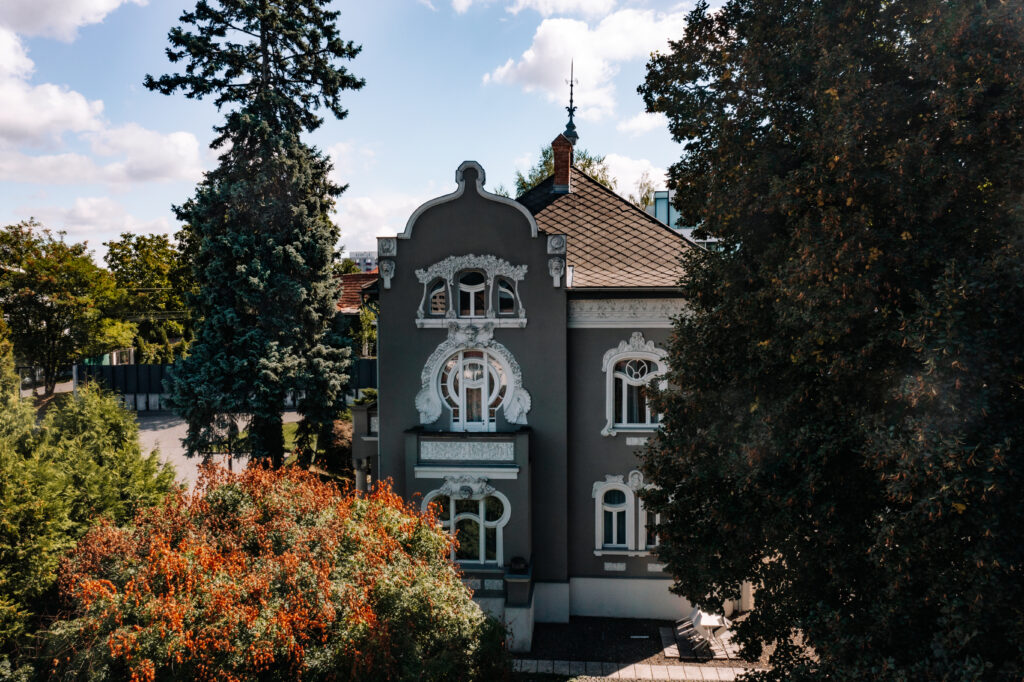
Imagine a over-a-century-old villa in the Art Nouveau style, with elegant salons, elaborate decorations, original furniture and details that transport you to a completely different era. Now add a contemporary hotel building, minimalist architecture, comfortable rooms and all the amenities you would expect from a good hotel. This is exactly the concept brought to life at Hotel Privo, of which Villa Csonka is a part.
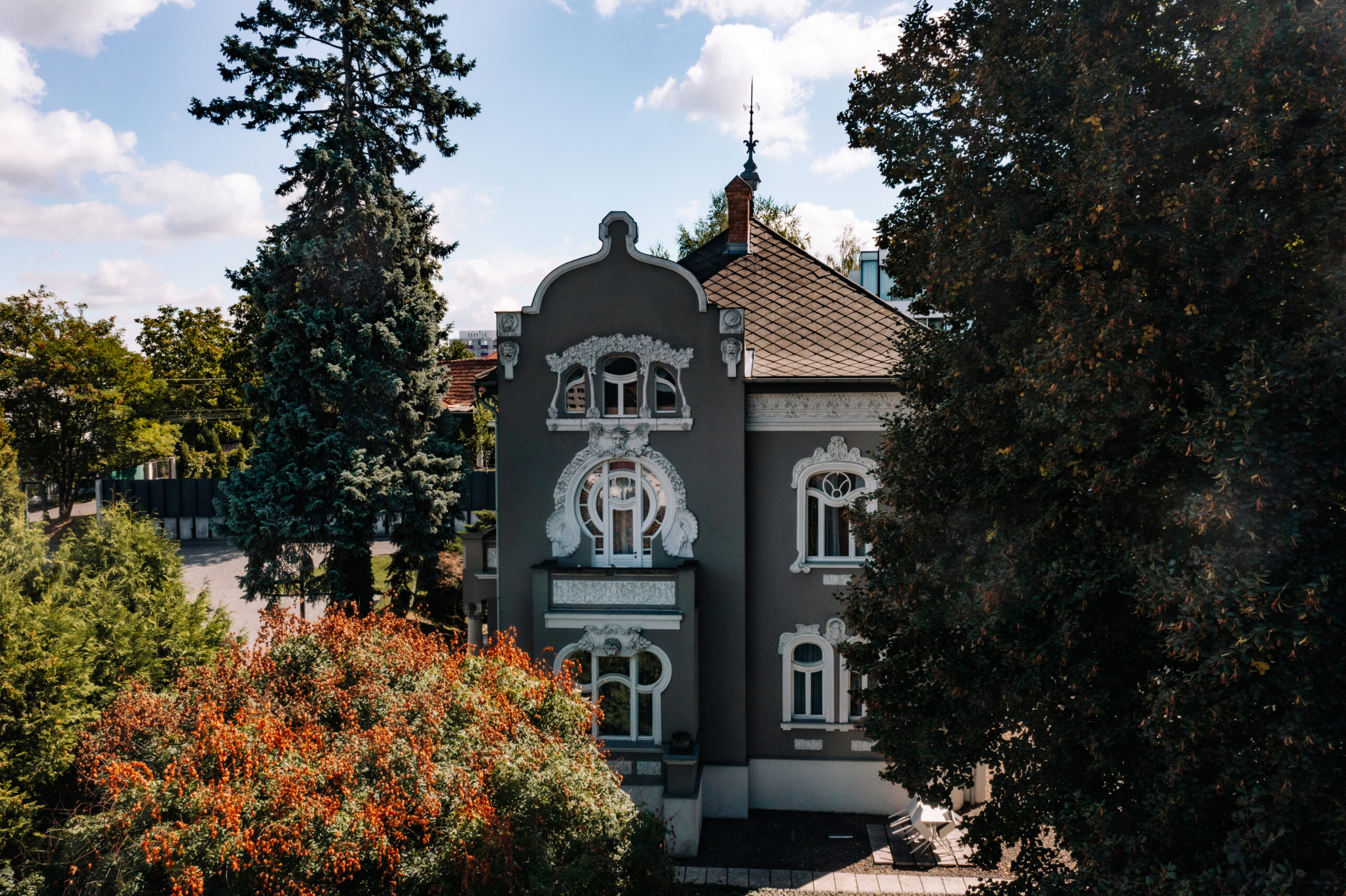
The early 20th-century Art Nouveau villa also features Art Deco furniture and elements. This place tells a fascinating story of how historic architecture can be given a new lease of life instead of being replaced by yet another modern building, and how it can become part of a contemporary setting. On the one hand, there is the atmosphere of a bygone era, with salons full of intricate decorations and extraordinary furniture; on the other, the contemporary part of Hotel Privo, which does not try to imitate a historic building but complements it beautifully, while still allowing the villa to take centre stage.
This combination is what I find most interesting, and it is what I want to focus on here. Villa Csonka is living proof that a charming, historic façade does not have to come at the expense of the comfort of a modern hotel.
The story of a villa: Who was Géza Csonka? – The history of the building, its original owner and its later fate
The story of Villa Csonka dates back to the beginning of the 20th century, when Târgu Mureș was increasingly embracing new architectural trends and the Art Nouveau style, known as Secession, was gaining popularity across Europe. Construction of the villa began in 1904, and its visionary and first owner was Géza Csonka – a Hungarian photographer based in Târgu Mureș and one of the better-known artists of his time. He wanted to introduce a new architectural style to the city, one that was then a real breath of fresh air. Géza had previously had the opportunity to admire this emerging architecture in Budapest, among other places, and was so captivated by the style that he decided to bring its aesthetic to the city he called home.
Villa Csonka was the first residential building in the Art Nouveau style in Târgu Mureș and one of the earliest examples of Secession architecture in the city. Interestingly, its construction began before some of Târgu Mureș’s most recognisable landmarks were built – the Administrative Palace and the Palace of Culture. You could say that this private villa was ahead of its time, anticipating the architectural transformation that would reshape the city just a few years later. So, as you stroll through the city today and admire its monumental early 20th-century architecture, it is worth remembering that the story of local Art Nouveau began, in a way, with this rather unassuming private residence.
Géza Csonka was quite an extraordinary character in his own right. Besides photography, he was passionate about cycling and was one of the pioneers of the sport in Târgu Mureș. What's more, he competed in tandem races alongside his wife, Krisztina! He was also actively involved in the local community, and his interests and activities extended far beyond his work as a photographer.
And here’s an interesting detail: Géza Csonka barely had time to enjoy the villa as his family home. He eventually left Târgu Mureș and moved to Hunedoara, and the building was even reportedly turned into a hotel at one point – which sounds rather surprising, considering that this is exactly the function it serves today.
Old meets new – how was the historic villa combined with a modern hotel? The concept, architecture and restoration
The story of Villa Csonka could have taken a very different turn. After Géza Csonka left Târgu Mureș, the building changed its purpose, and in later years it housed, among other things, Casa Pionierilor, a former institution for children and young people. Over time, the historic villa began to require more and more care and a thorough restoration. Fortunately, at the beginning of the 21st century, an idea emerged: rather than letting it fall into disrepair, why not restore it to its former glory and give it an entirely new purpose?
In 2003, the villa and the surrounding plot were purchased by its current owners, who decided to create a modern hotel complex here. However, the idea was never simply to incorporate the historic building into a hotel development. From the very beginning, the concept was much more interesting: Villa Csonka was meant to become the heart of this unique project, with the new architecture complementing it rather than competing with it. The design process began in 2007, followed by construction of the new complex in 2009. The villa itself was restored between 2011 and 2013, bringing back its historic character while preserving as many original features as possible. Hotel Privo officially opened in 2014.
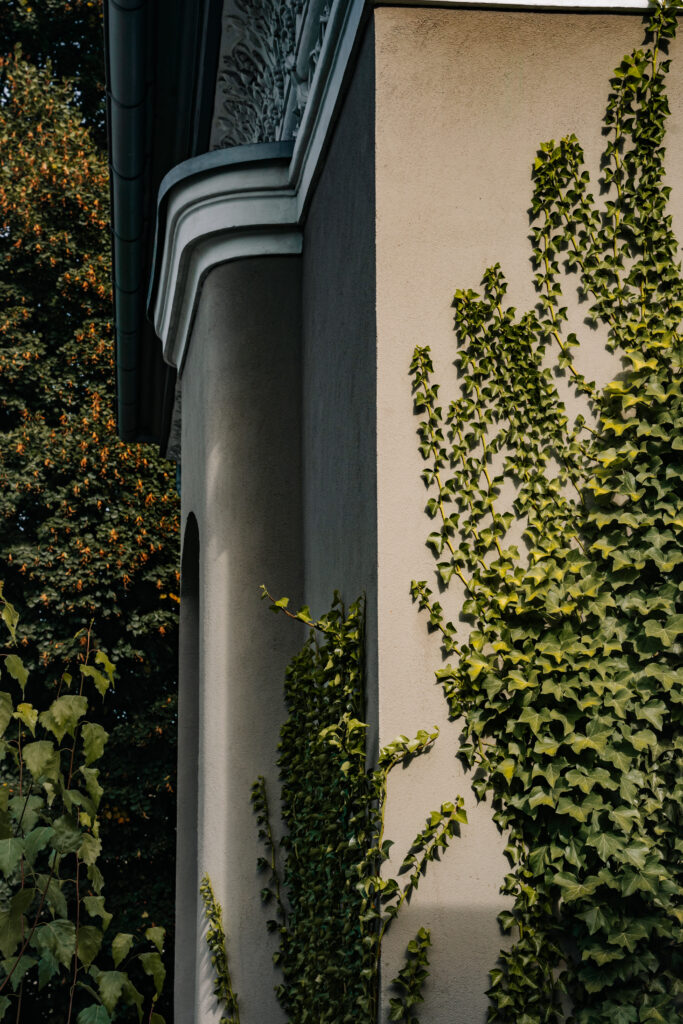
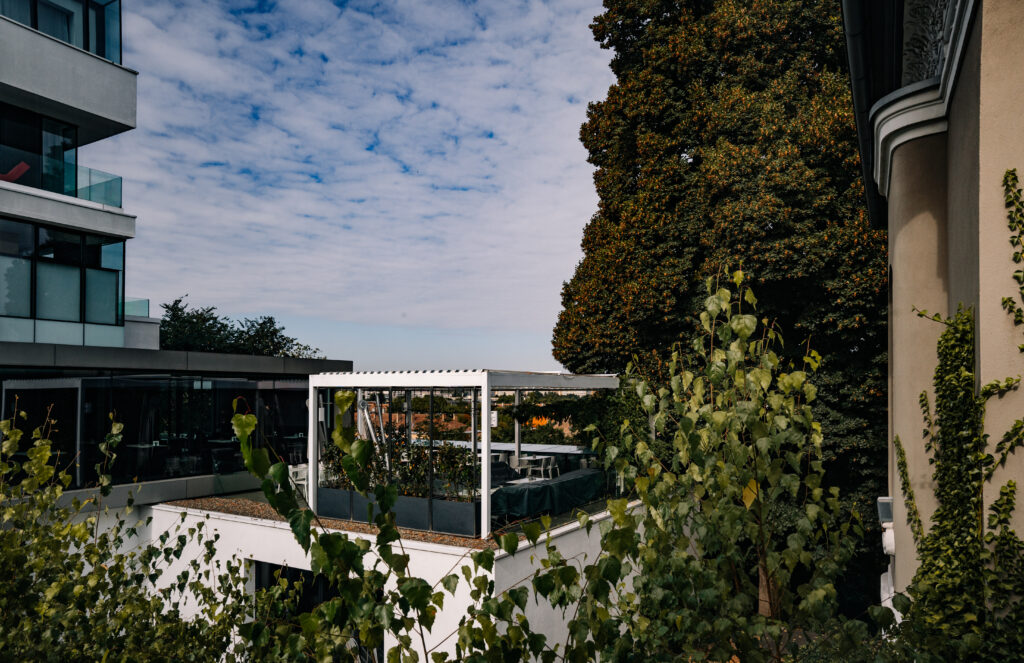
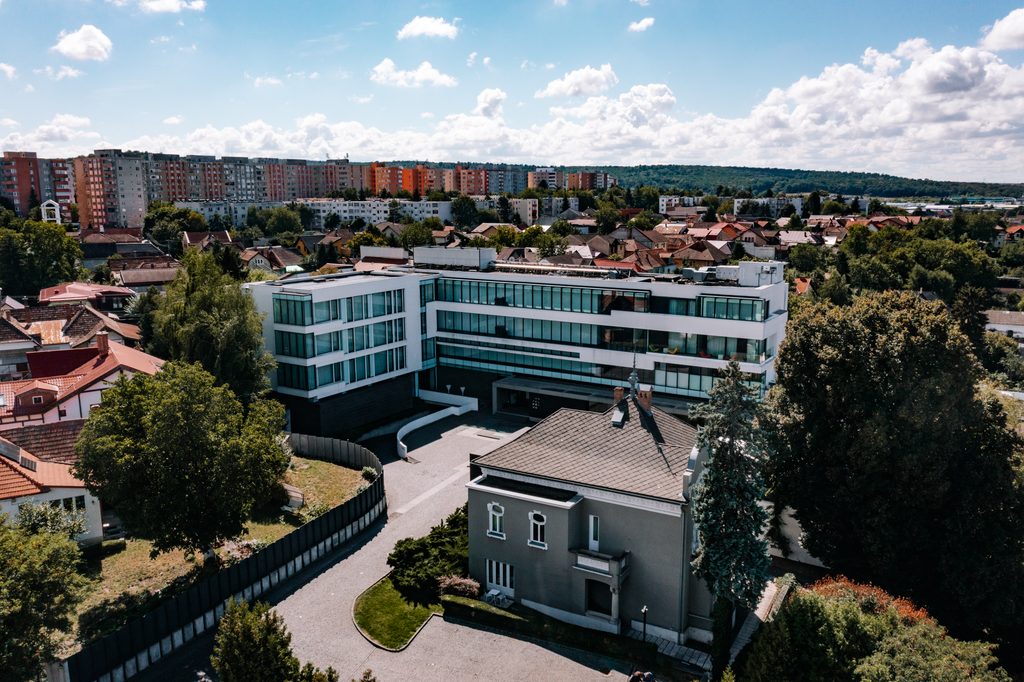
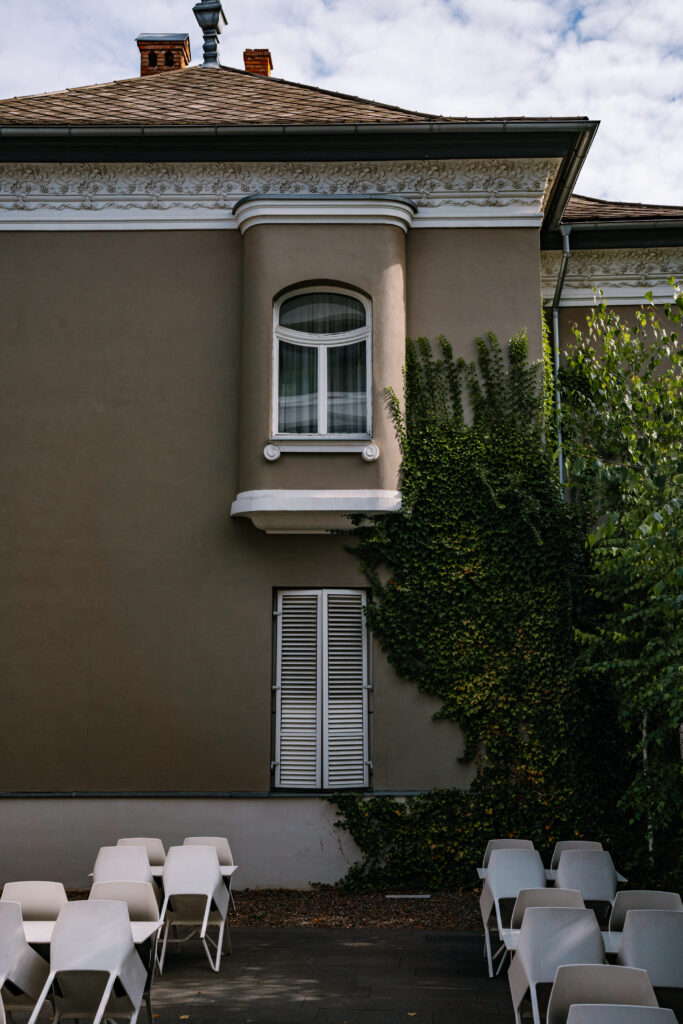
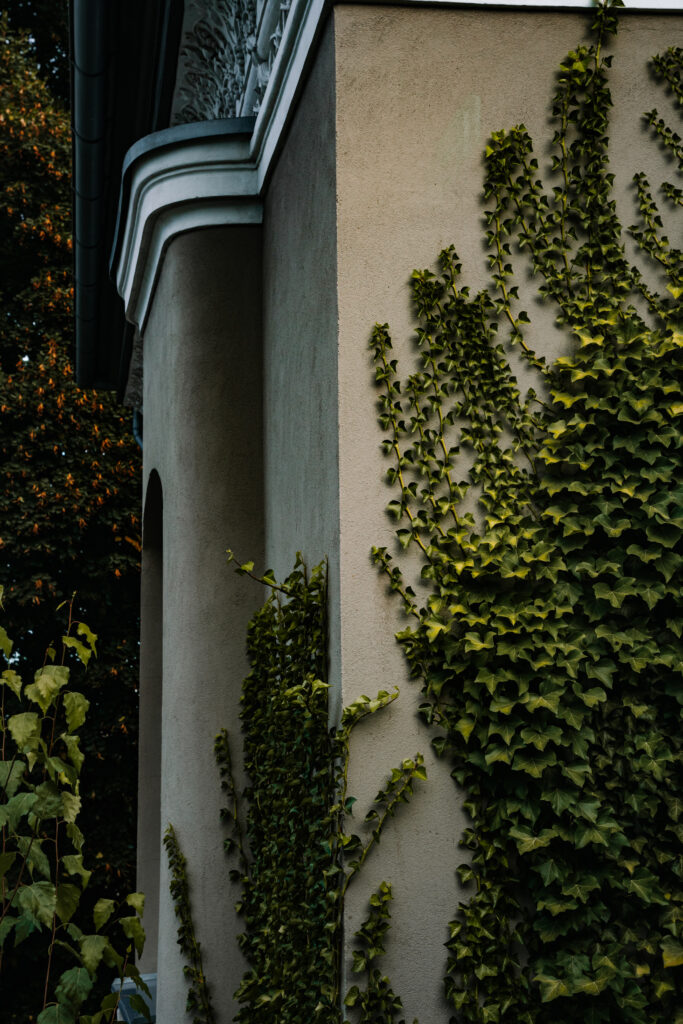
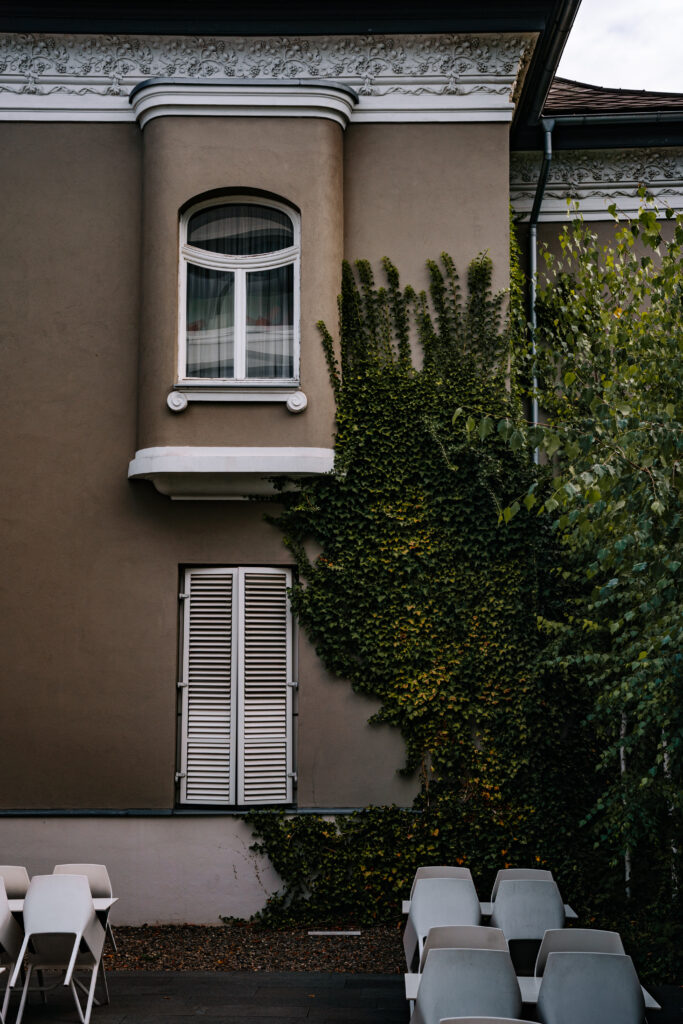
The architectural design was entrusted to DE3 Group. The architects faced a rather interesting challenge: how do you create a contemporary hotel that is functional, comfortable and meets all the requirements of a modern property, without overwhelming a century-old villa? The solution was a carefully considered one. The historic building was preserved at the front of the plot, on slightly higher ground, while the new hotel wing was set further back. This meant that Villa Csonka was not overshadowed by the new development, and its distinctive silhouette remains one of the first things to catch your eye as you enter the hotel grounds.
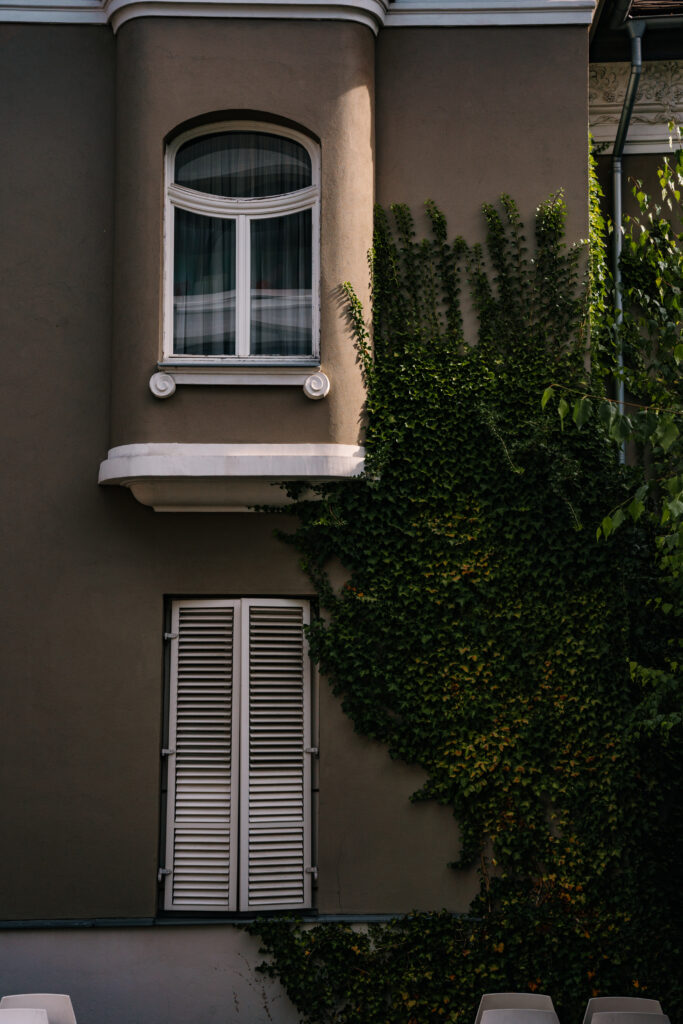
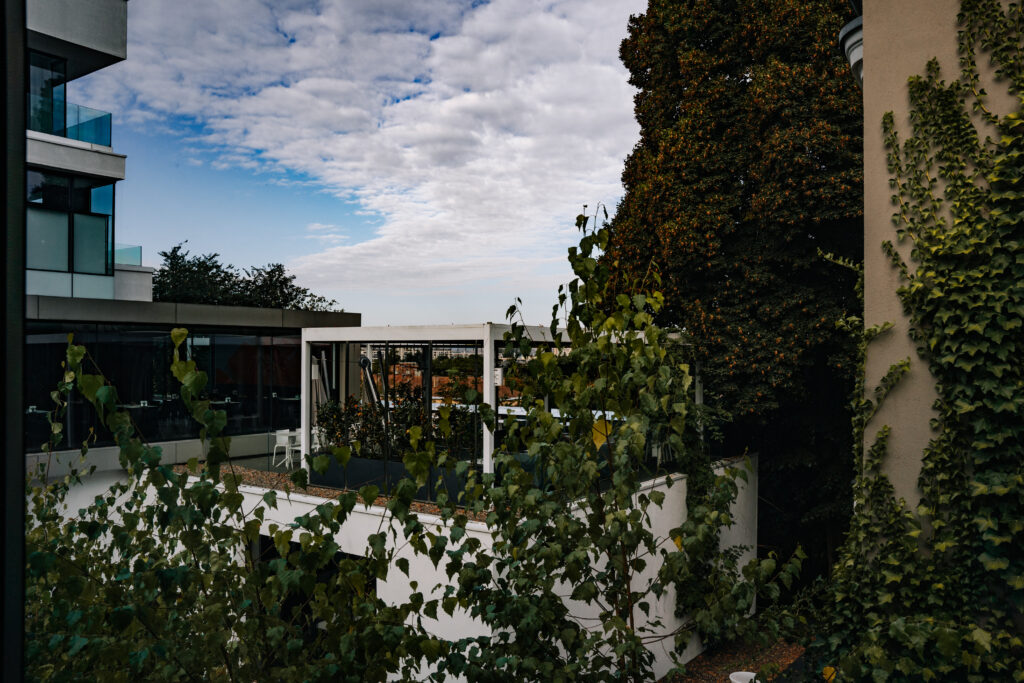
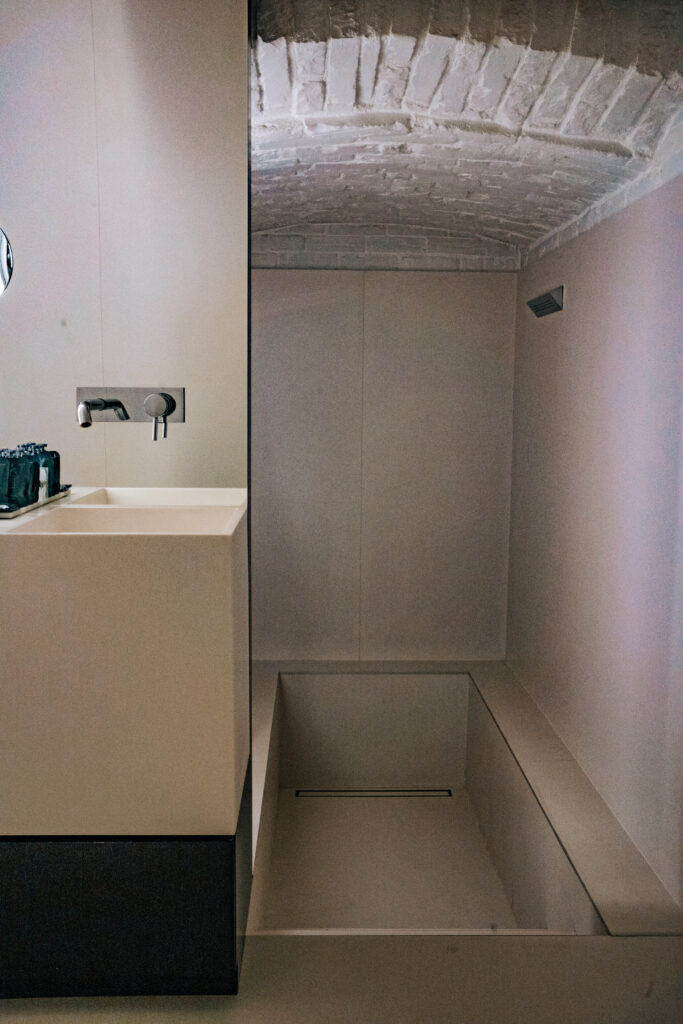
The contrast between the two buildings is intentional and very carefully thought out. The historic villa has retained its Art Nouveau character, decorative details and elegant interiors, while the new Hotel Privo building embraces minimalism. Clean lines, large glass windows, concrete, stone, glass and natural materials create a completely different aesthetic. There is no attempt to make the new building look historic – its contemporary character is clearly visible, but it never takes attention away from the villa. The two buildings are connected by an inner courtyard, while glazed corridors allow guests to admire the historic residence even from inside the modern hotel.
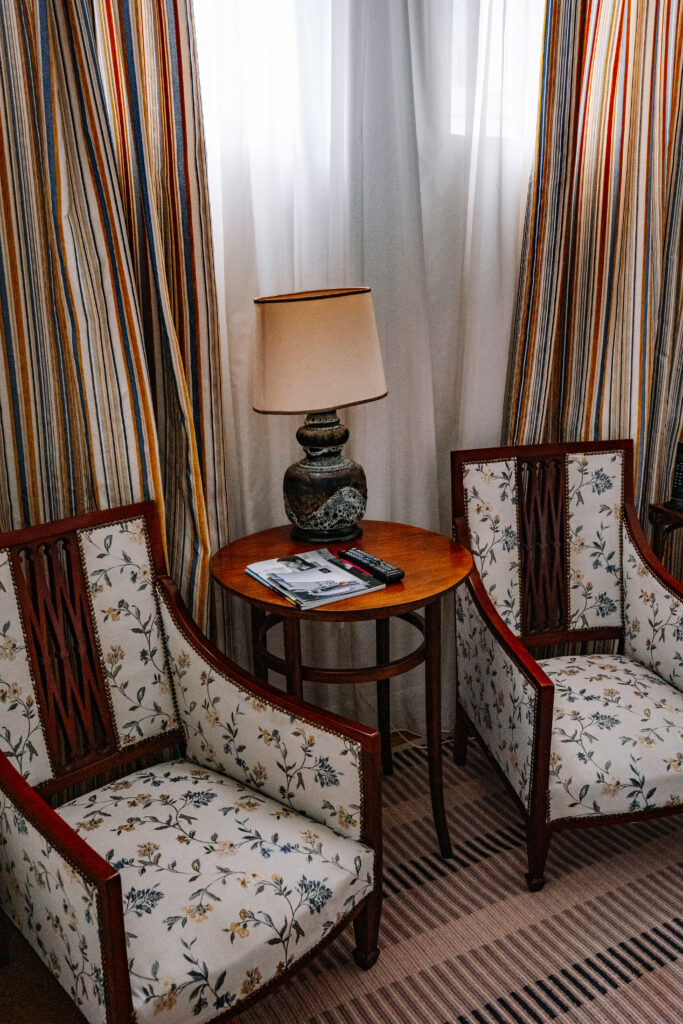
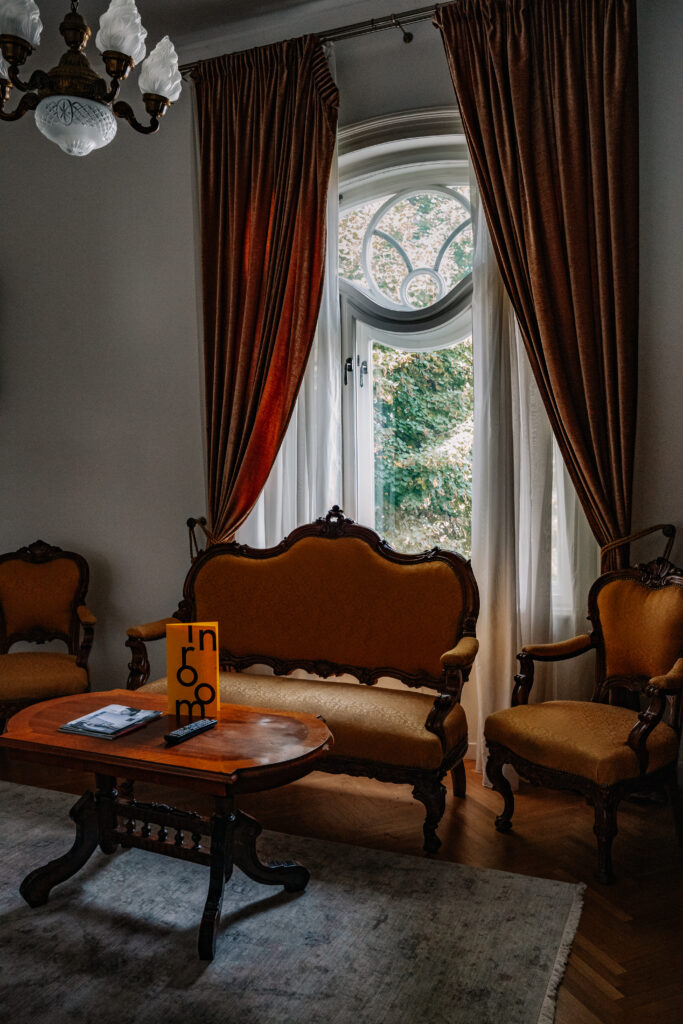
The villa itself tells a different story. During the restoration, care was taken not only to preserve its architecture but also to restore the furnishings and atmosphere of its historic interiors. You will find original, over-a-century-old Thonet furniture and Art Deco elements, which have been carefully restored and brought back into use. As a result, the interiors don't look like a contemporary design styled to imitate a bygone era. The furniture has a story of its own, the decorative details are not simply there for show, and the whole space retains the character of an elegant early 20th-century residence, while remaining wonderfully authentic.
Interestingly, the project also took great care of the surroundings of the villa. The sloping terrain was used to create a garden with stone pathways winding their way through the greenery. Rather than simply placing a historic building in the middle of a hotel car park, the result is a thoughtfully designed complex where old and new come together to form one harmonious whole.
This was my favourite part of the entire Privo concept. They didn't try to stop time or turn the villa into a museum for the sake of it, moving all the hotel's daily activities into a new building. Instead, they brought life back into the historic building, allowing it to remain part of the place's everyday rhythm – this time, as a hotel. History and modernity seem to get along rather well here.
Interiors with a Story – Furniture, Details and the Atmosphere of a Bygone Era
What immediately catches your eye in Villa Csonka's interiors is, of course, the furniture and all those little details that create the unique atmosphere of the place.
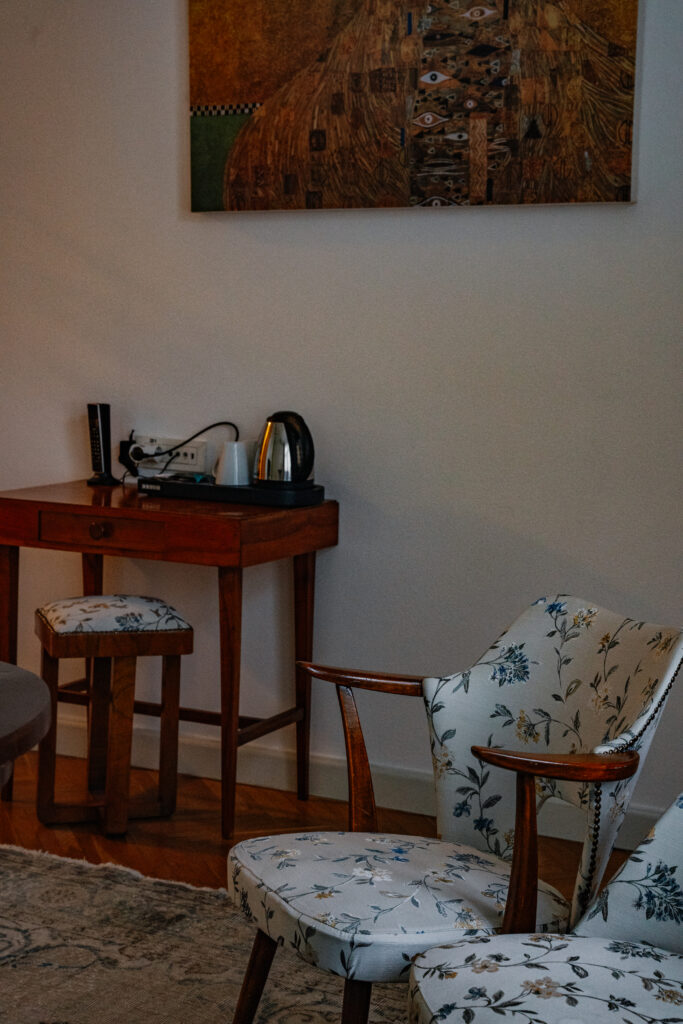
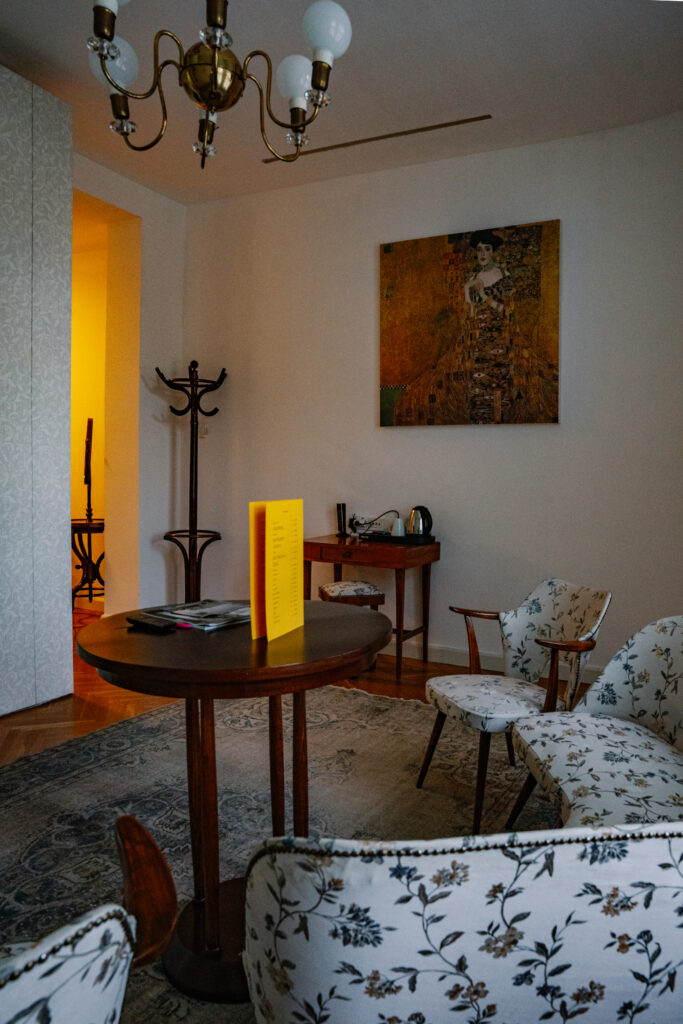
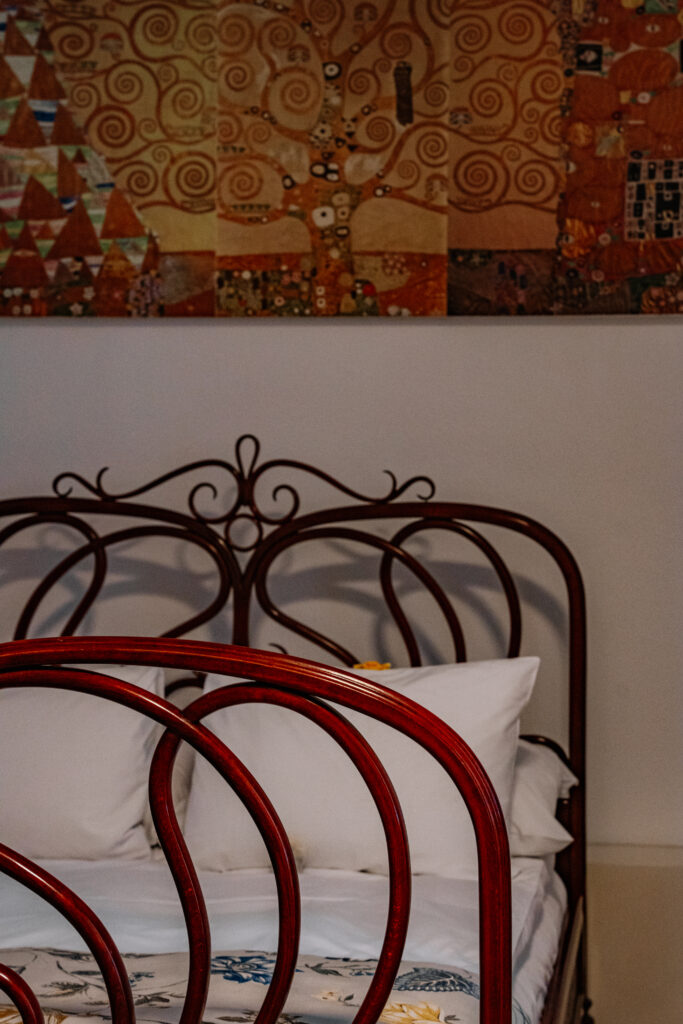
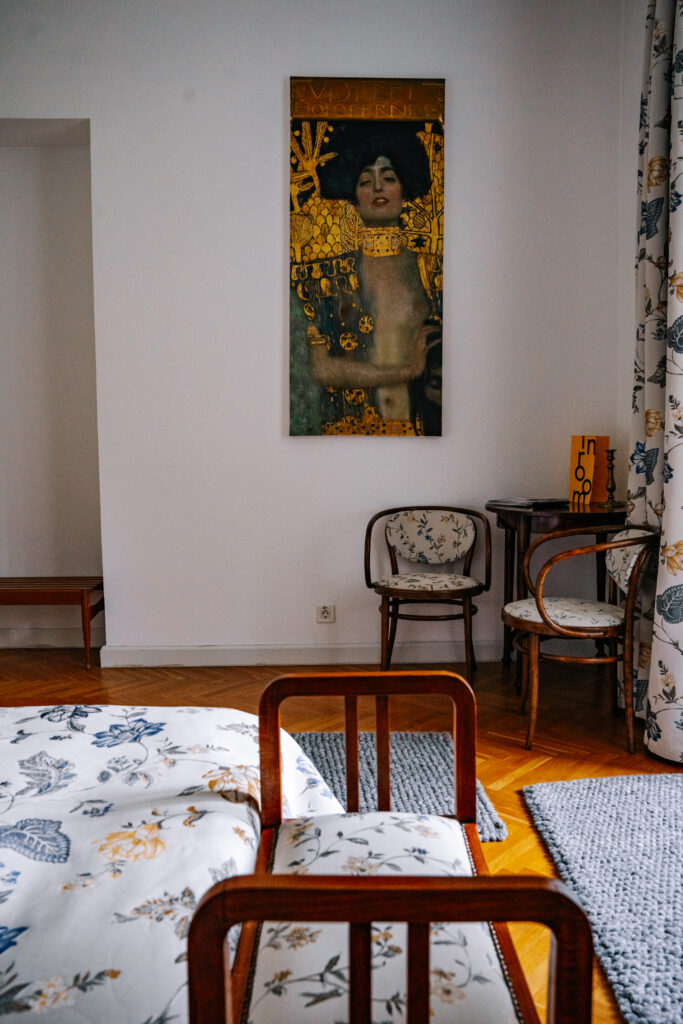
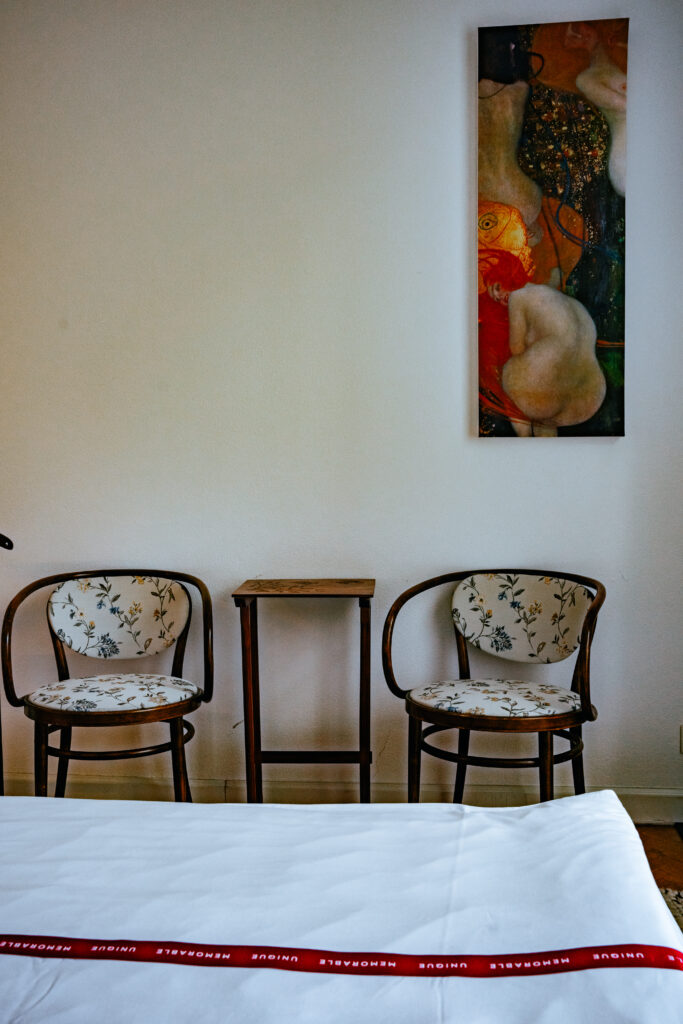
The ornate curves of the mirrors reflect the warm interiors, filled with rounded shapes and flowing, soft, wavy lines. The curtains feature delicate botanical and floral motifs, while a poster on the wall depicts a woman with windswept hair, reminiscent of Klimt's paintings. There is rich ornamentation, plenty of coloured glass and steel, and, of course, lots of colour.
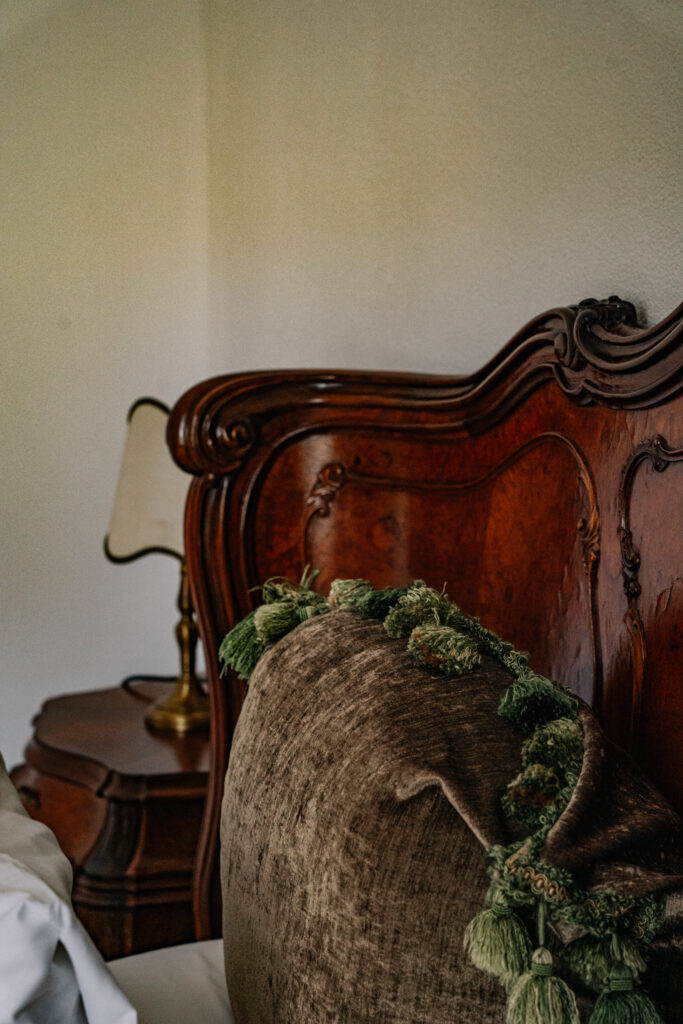
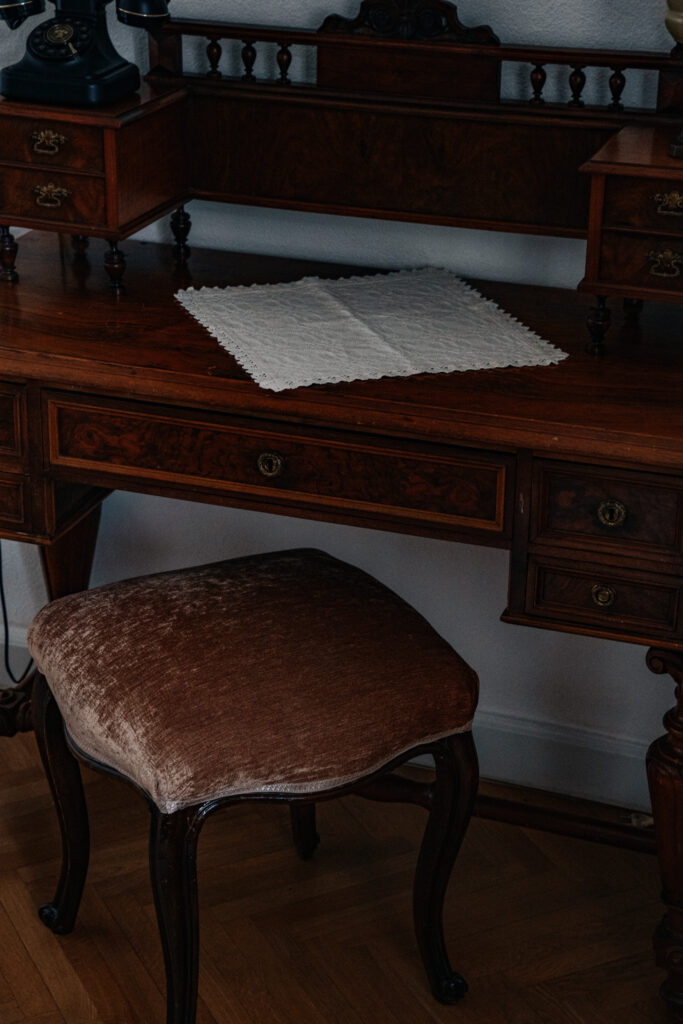
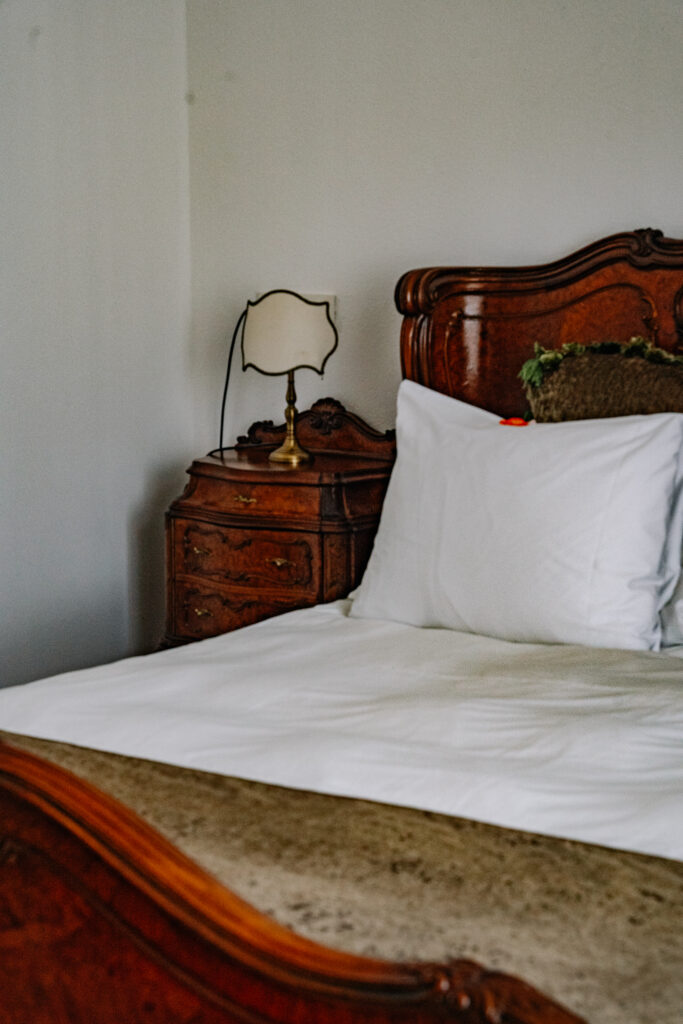
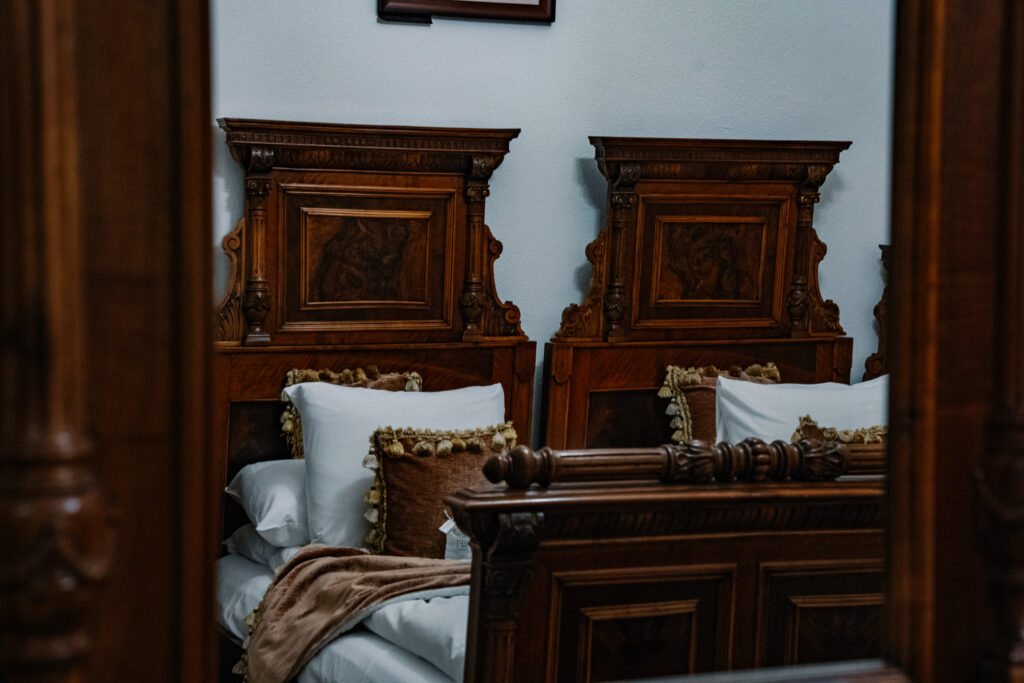
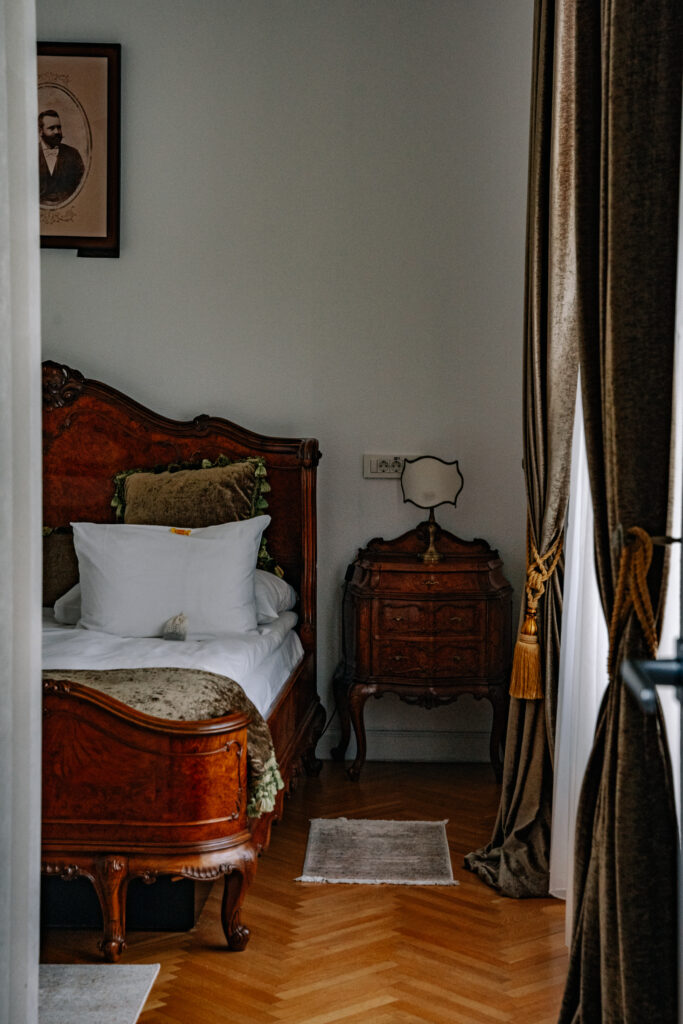
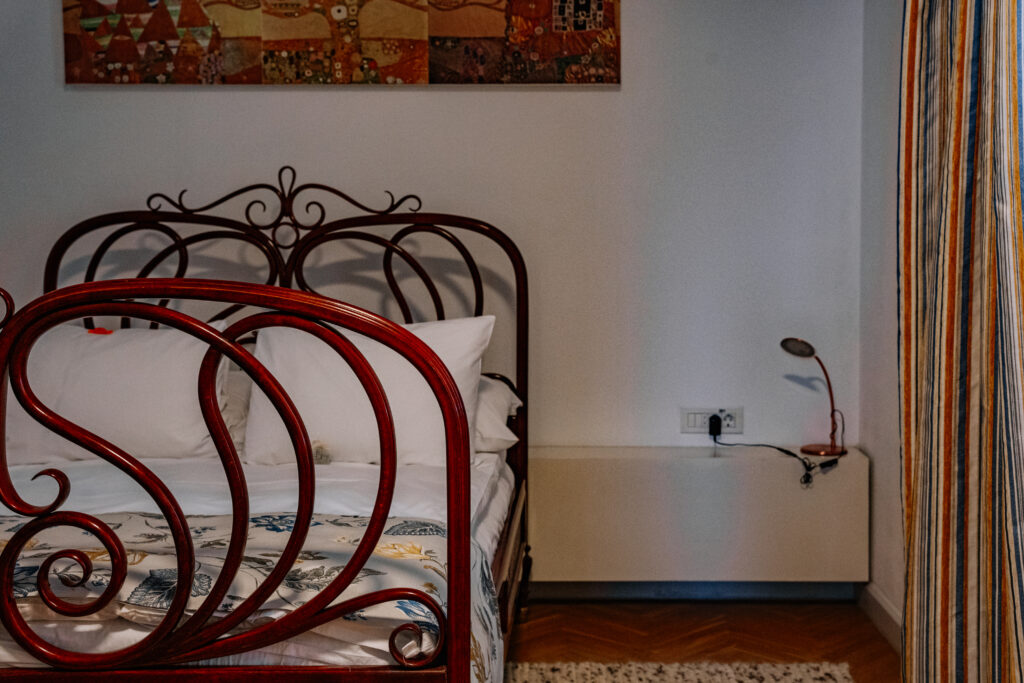
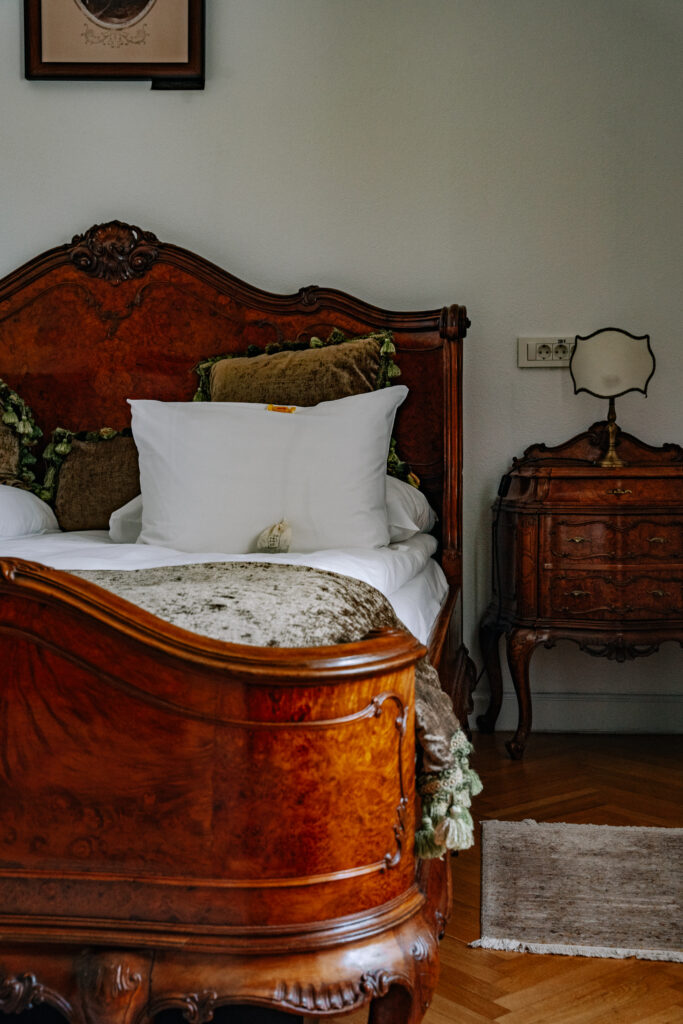
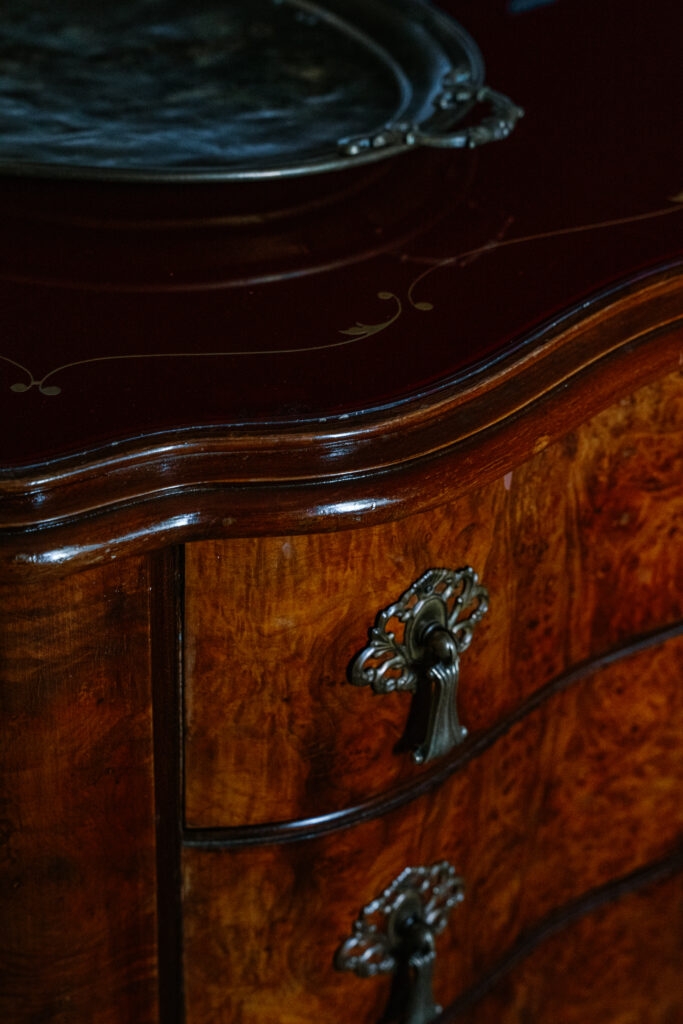
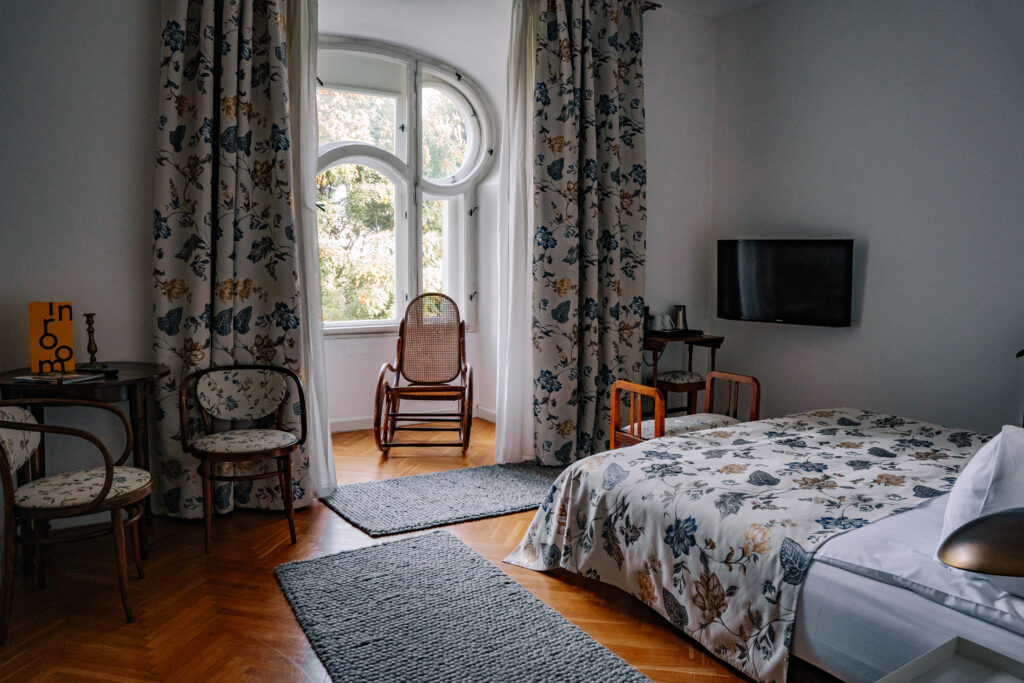
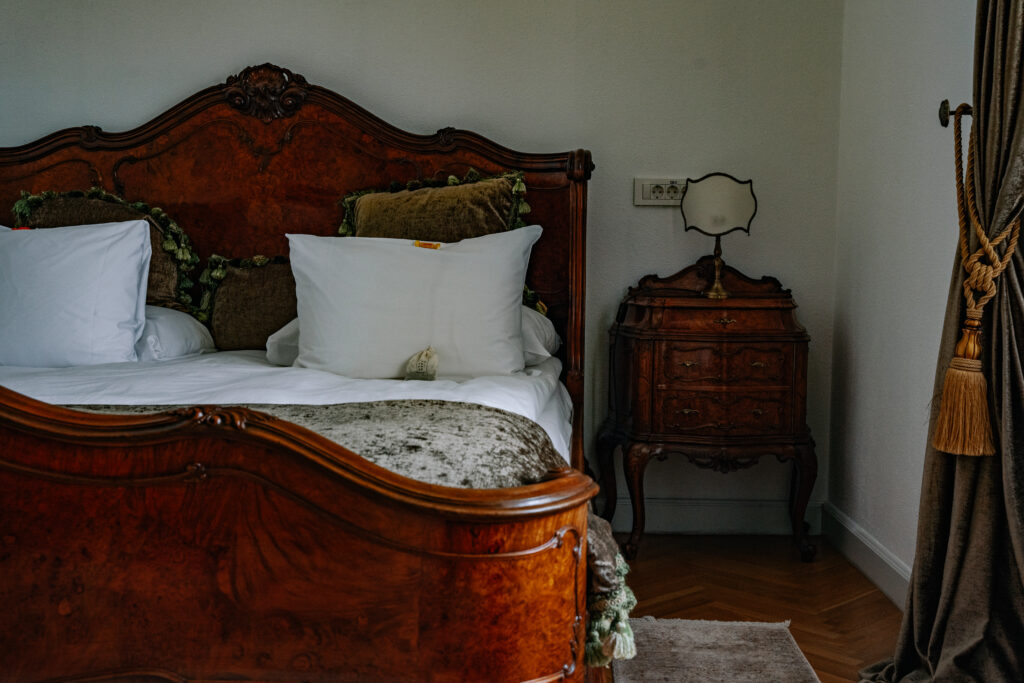
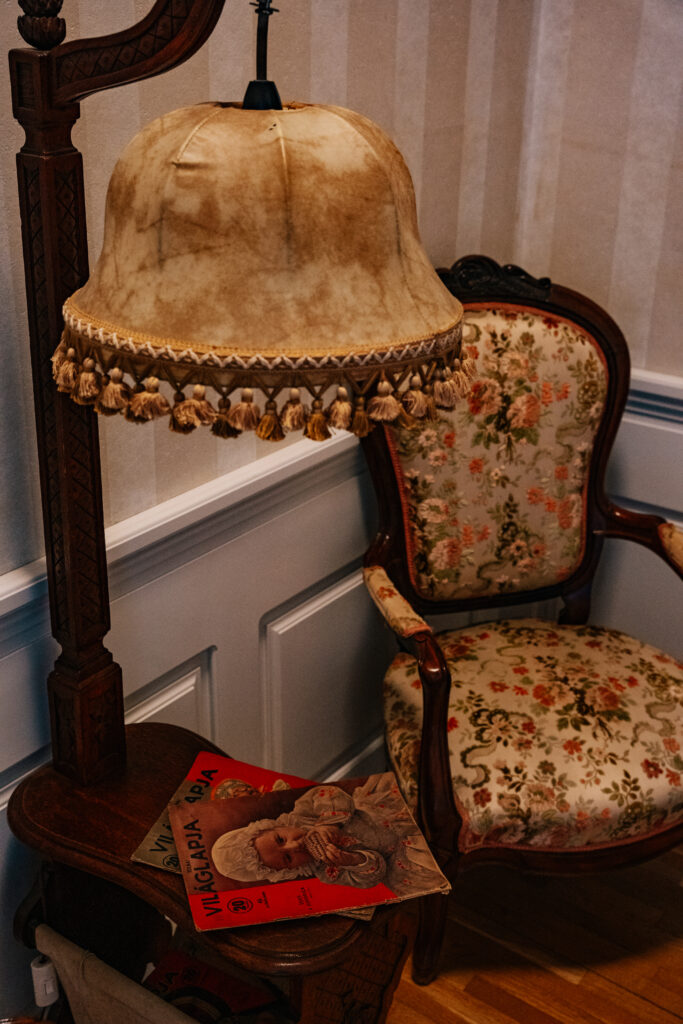
You won't find any typical hotel furnishings here, the kind that could just as easily belong in any hotel anywhere in the world. Instead, there are wooden beds with decoratively carved headboards and ornate frames, small tables, antique desks, dressers, mirrors in decorative frames and chairs that look as though they have witnessed far more than most of us ever will.
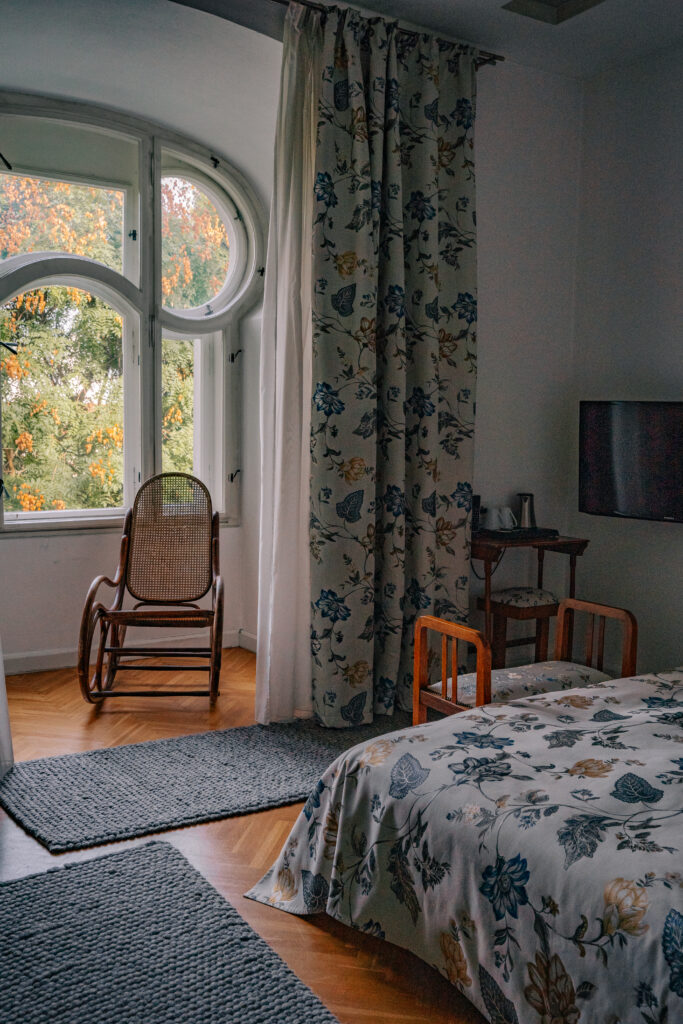
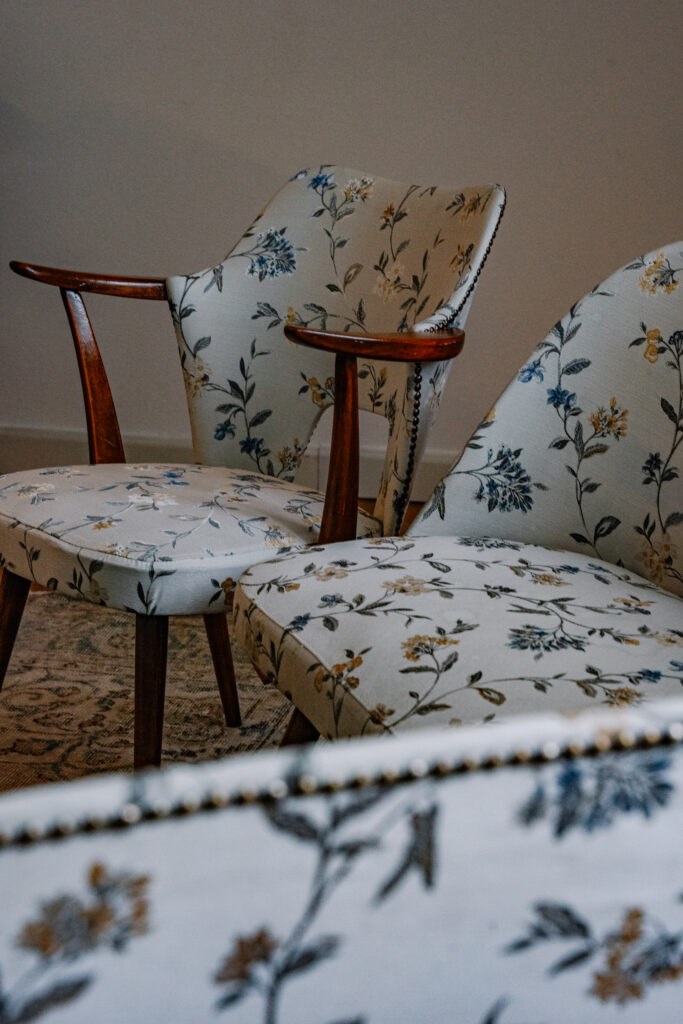
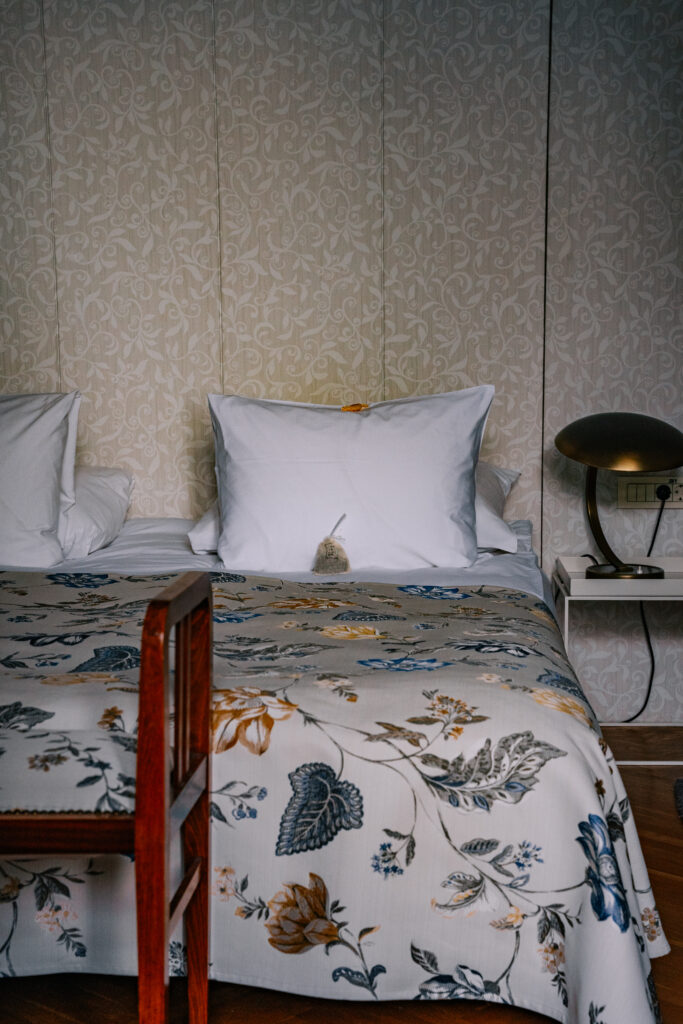
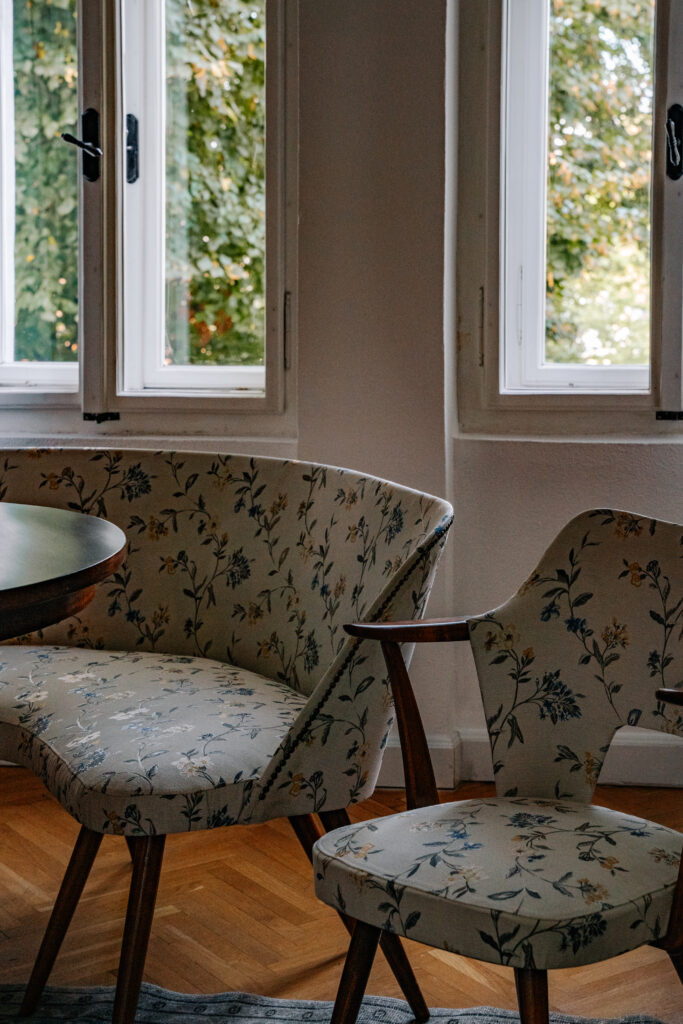
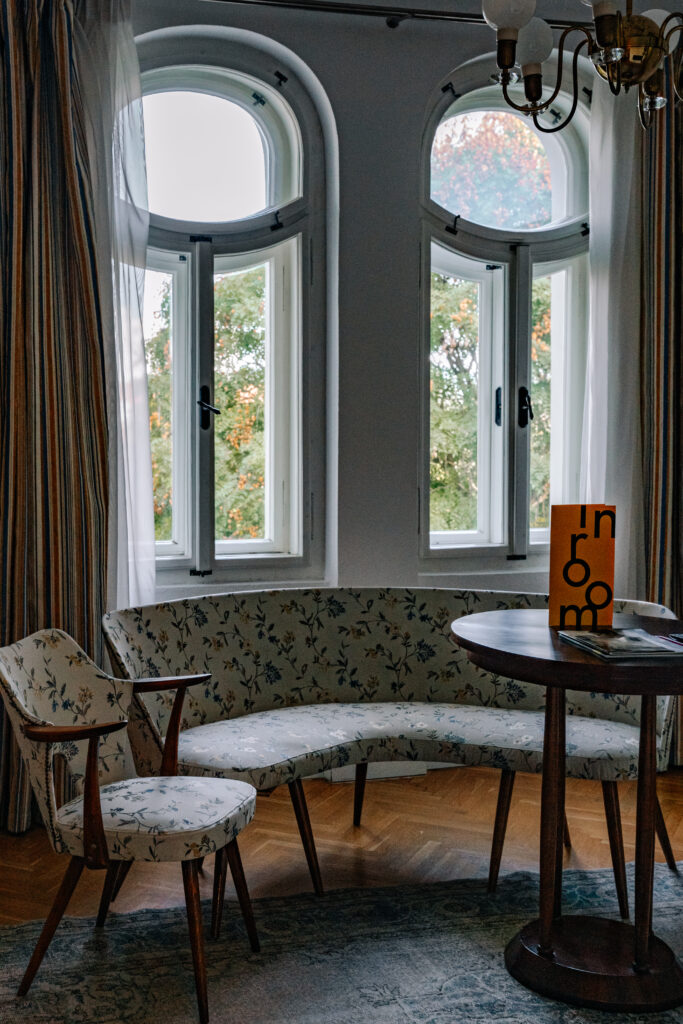
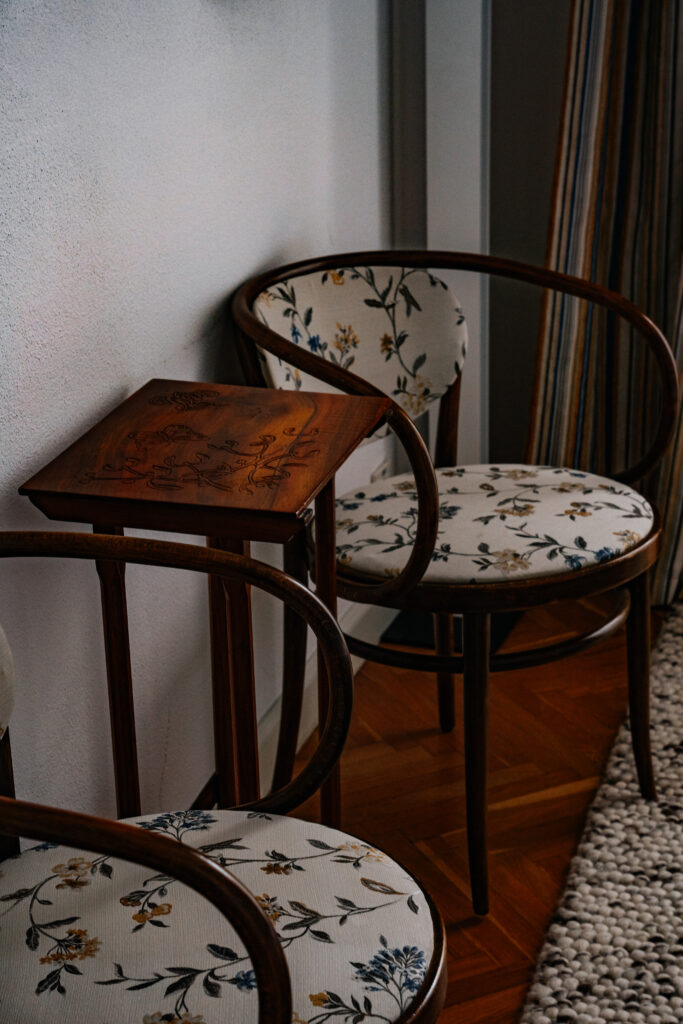
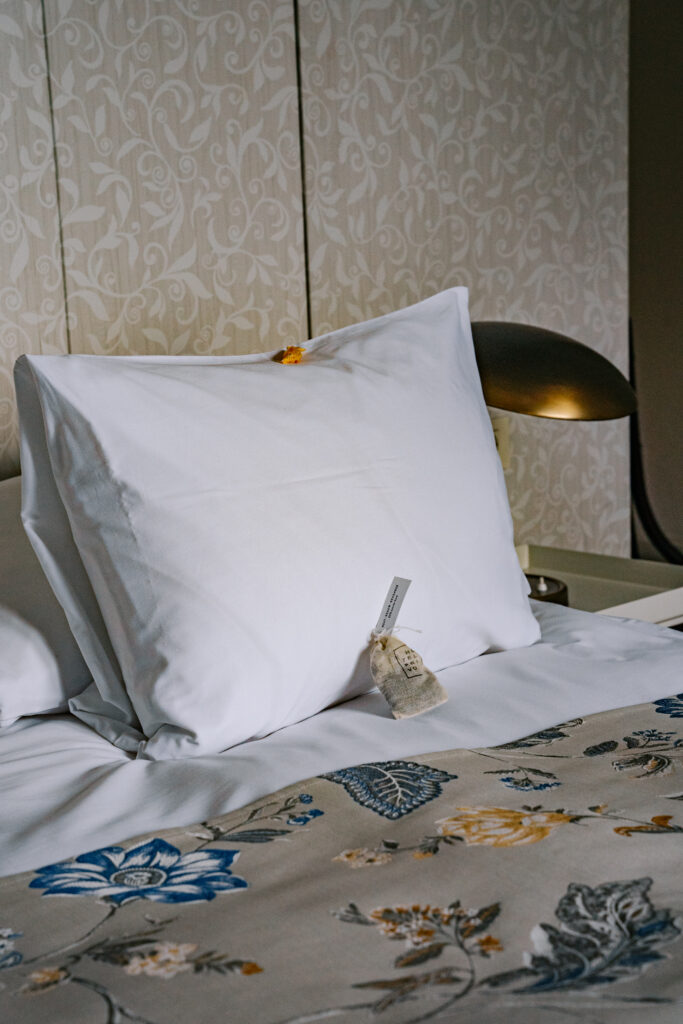
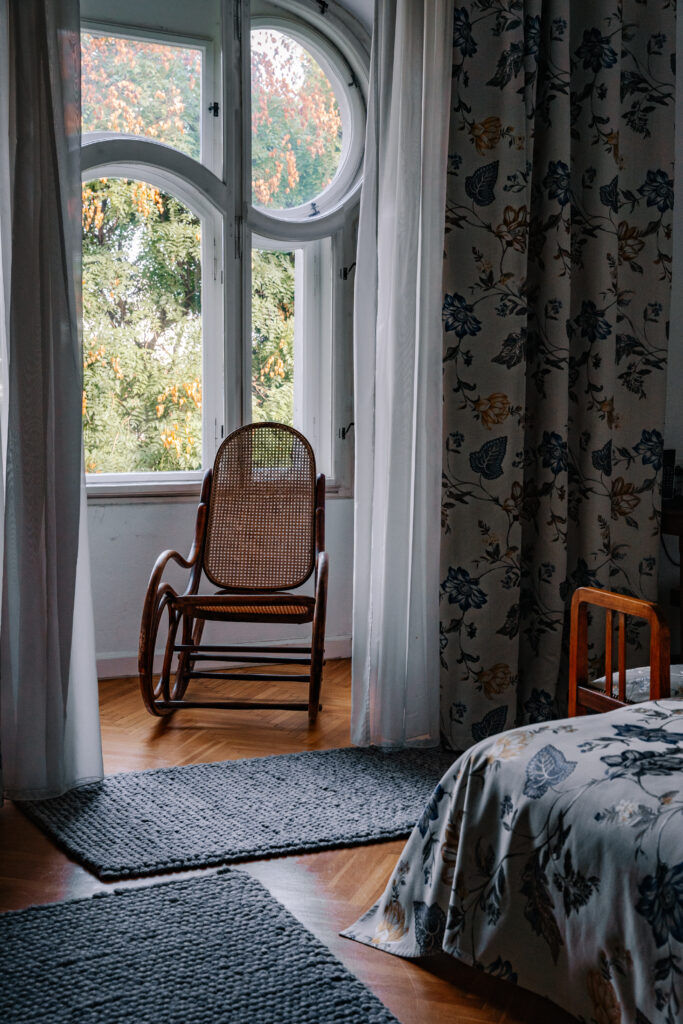
I particularly love the bentwood furniture, characteristic of traditional Viennese design. Add to that upholstered armchairs, floral patterns on the curtains and bedspreads, heavier fabrics, wooden parquet flooring and tall windows with beautiful rounded shapes. The overall look is quite classic, but never overwhelming. The interiors have plenty of character while remaining cosy and functional.
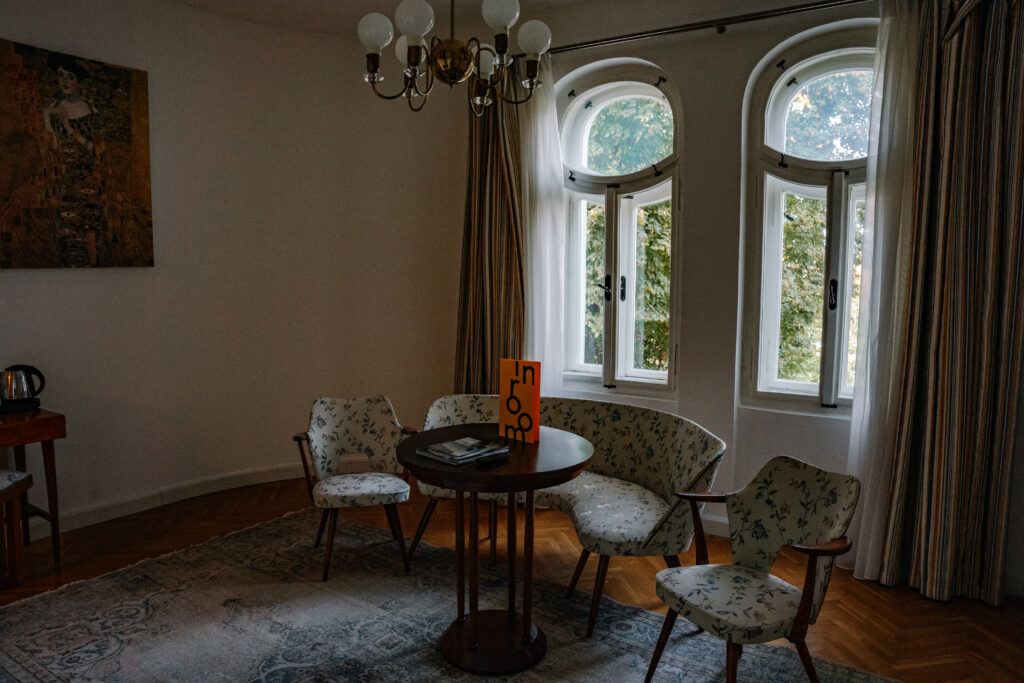
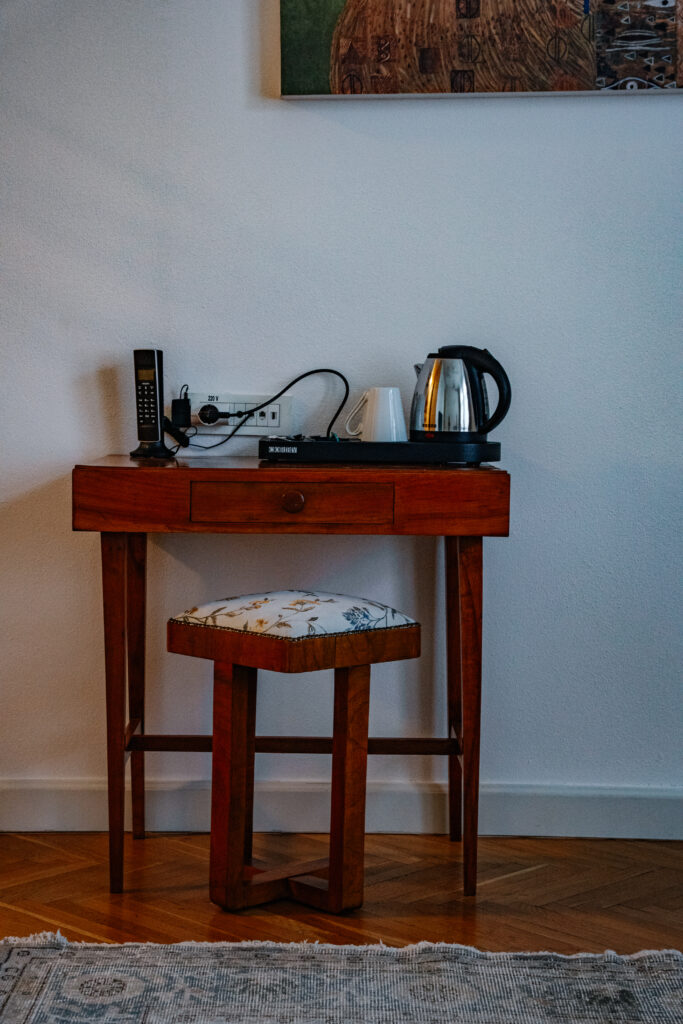
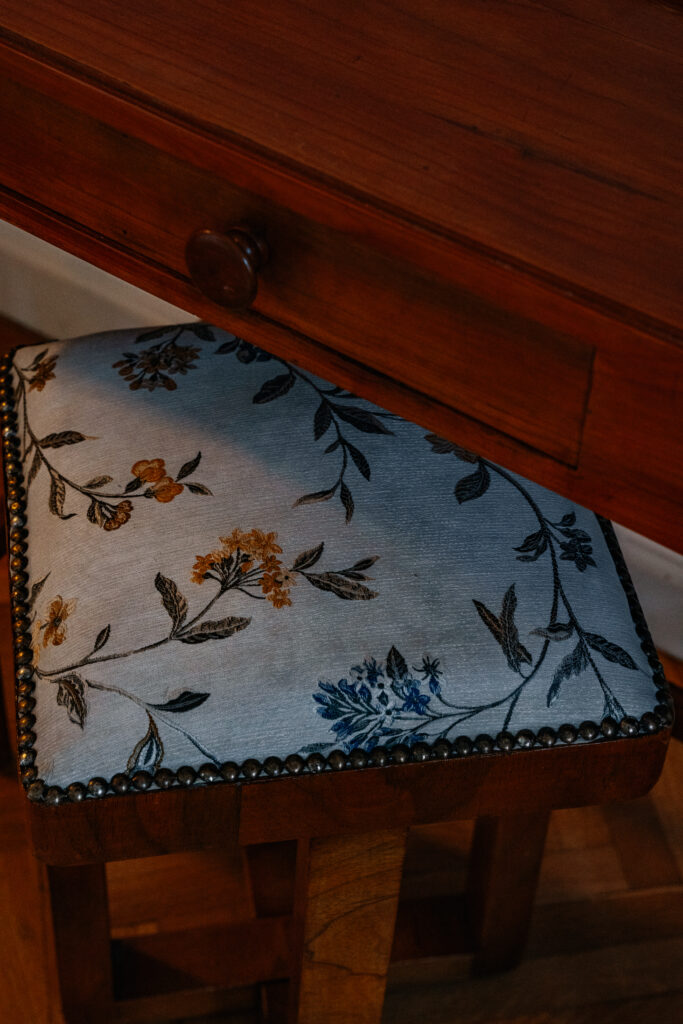
The rooms also feature cosy little seating areas, tables, desks and chairs that complement the rest of the furnishings. I particularly loved the armchairs (there was even a rocking chair!) with their distinctive rounded backs and floral upholstery. I always find something especially charming about these little details – a wooden desk with a matching stool, an old-fashioned telephone, lamps and mirrors in ornate frames. Together, they create a harmonious space that makes me want to spend the entire day there.
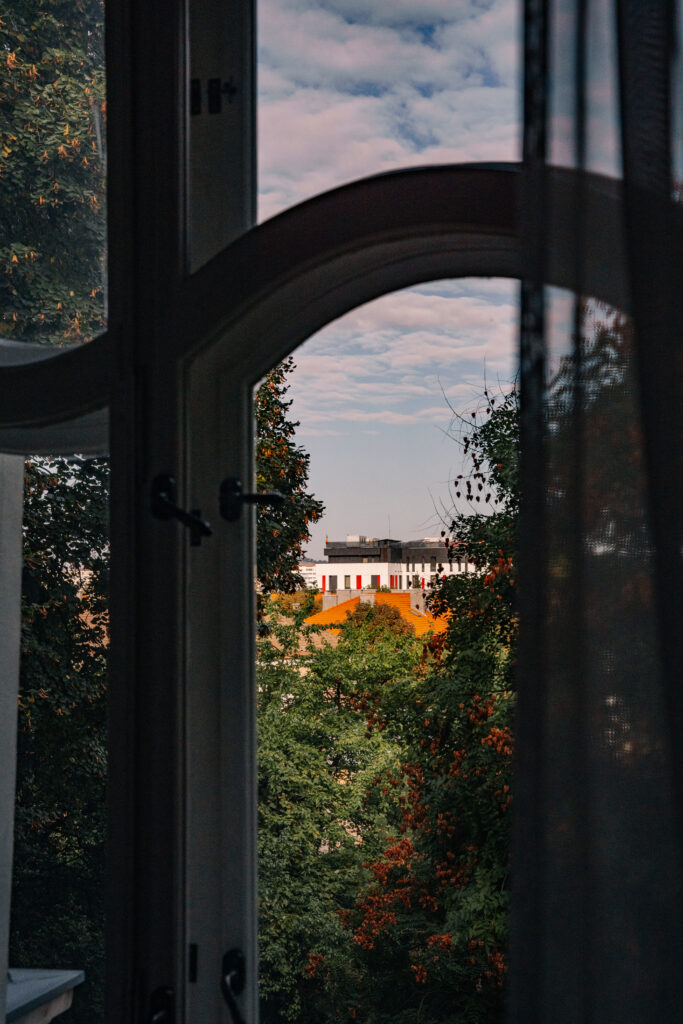
I also really like the way the character of the building itself has been preserved. Large arched windows let plenty of natural light into the rooms, while the views over the city and the greenery surrounding the hotel are a real highlight. The hotel sits on a hill, so there's quite a bit to admire from up here!
What Is It Like to Stay at Villa Csonka? Comfort, Amenities and Breakfast
You can settle into an armchair by the window, pick up a book and, for a moment, feel more like a guest in a historic residence than an anonymous hotel tourist who will soon have to check out and head off to their next destination.
And although Villa Csonka is over a hundred years old, that doesn't mean having to give up modern comforts. The rooms are equipped with everything you need for a comfortable stay, while the historic furniture and decorations don't get in the way of making practical use of the space.
In addition to comfortable beds, the rooms feature a cosy seating area (with a sofa or chaise longue), a space to work (with a desk), a TV, facilities for making coffee and tea, and a mini fridge. There is plenty of space, too, along with large wooden wardrobes. Some rooms also have rocking armchairs or elegant writing desks. The huge windows let in plenty of natural light, whose warm rays gently kiss the beautiful wooden furniture and delicate floral upholstery. Practical amenities are all there, but the interiors still retain the character of a historic villa.
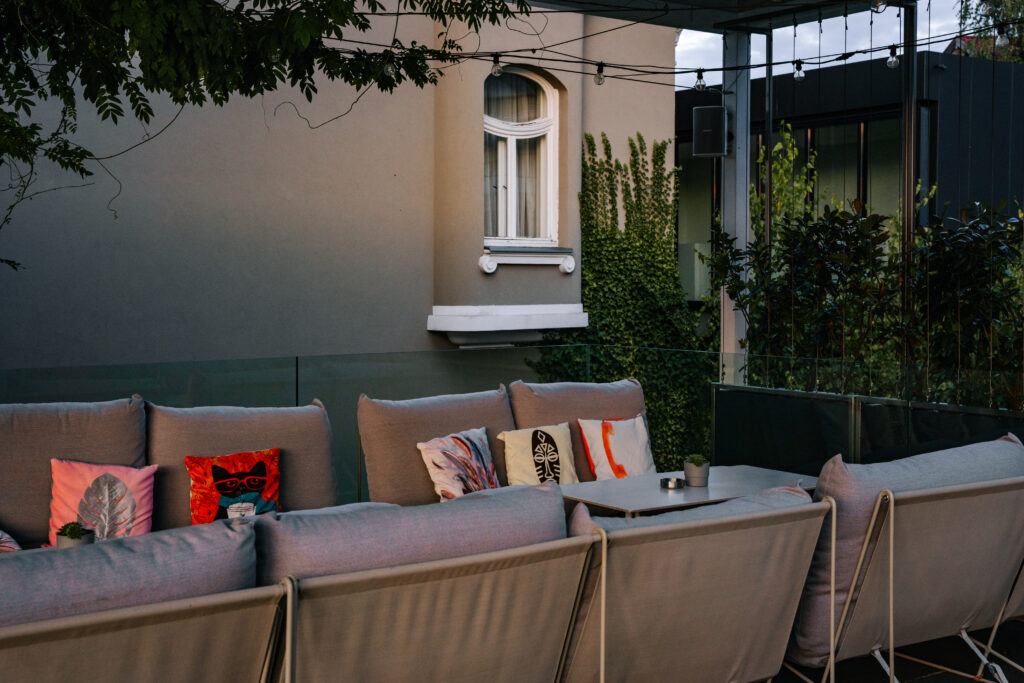
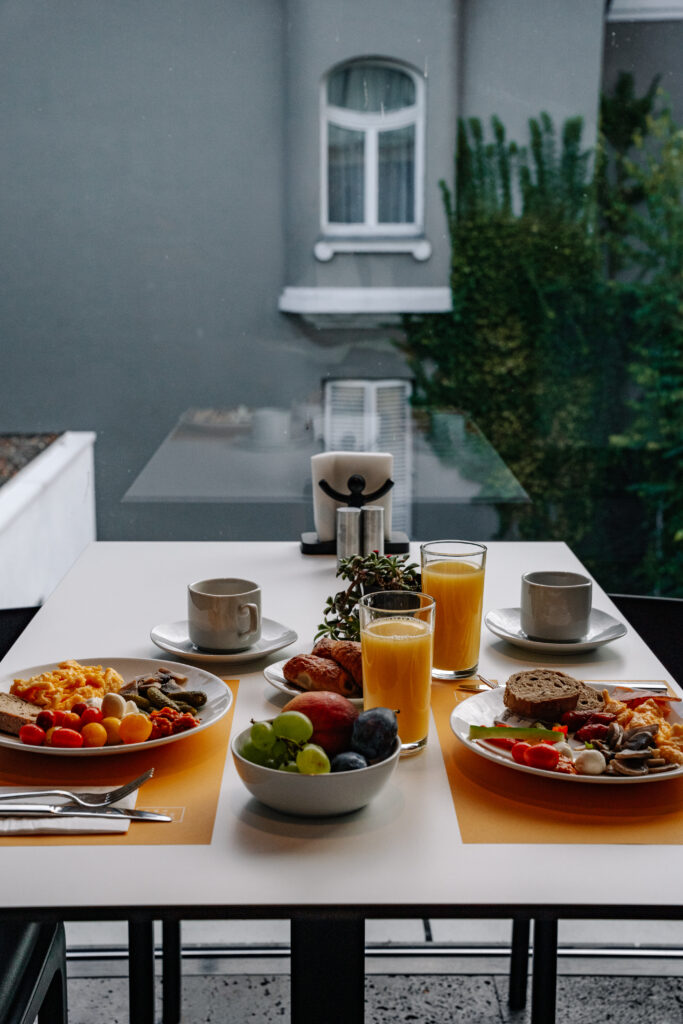
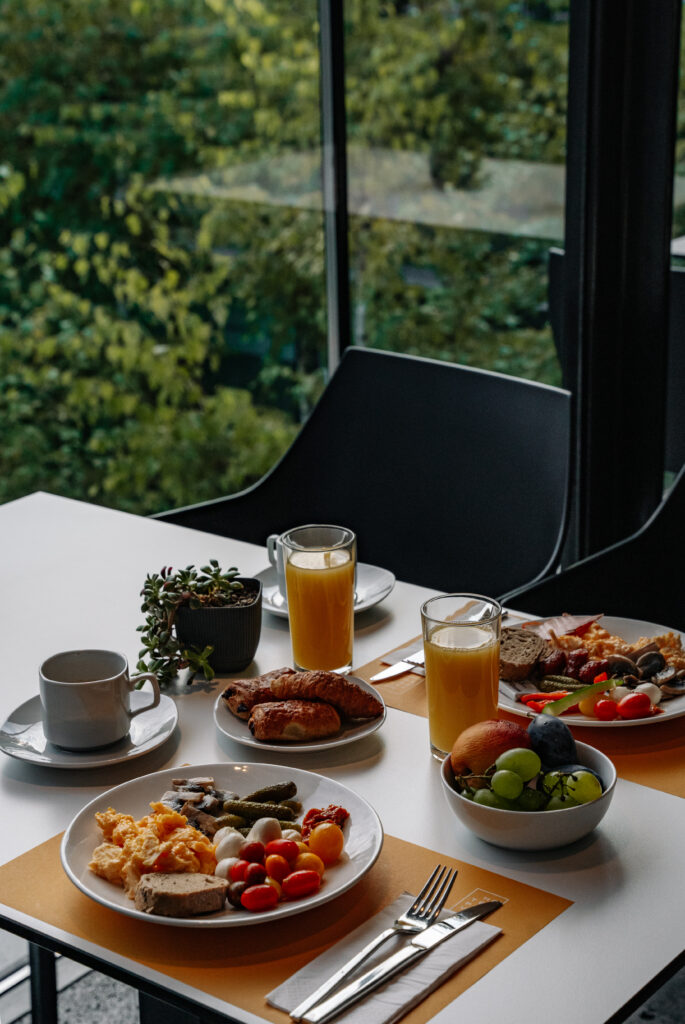
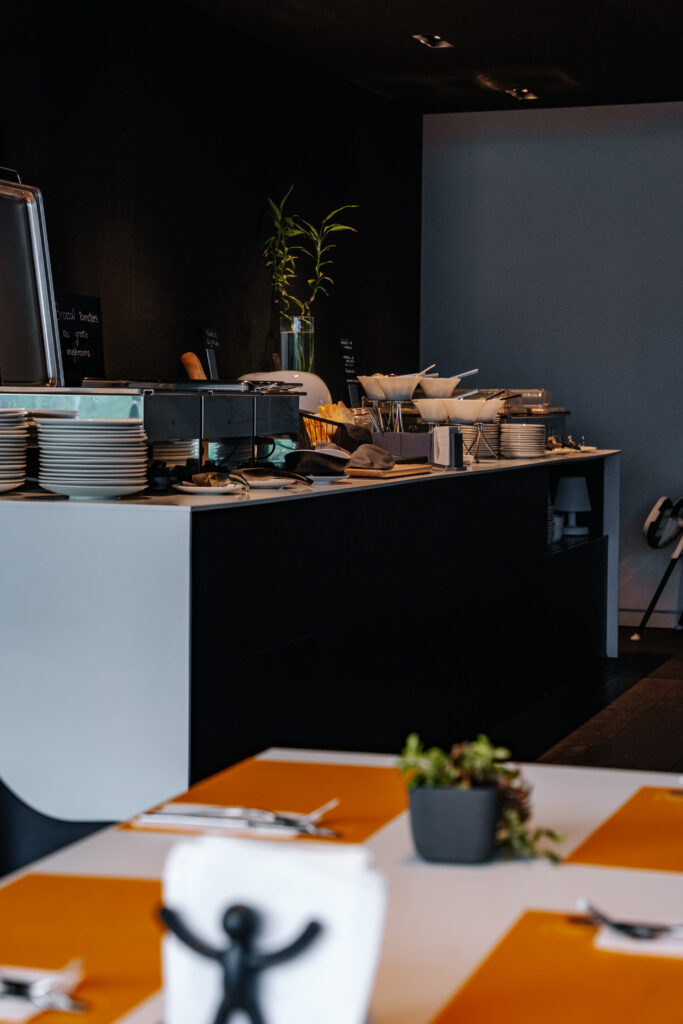
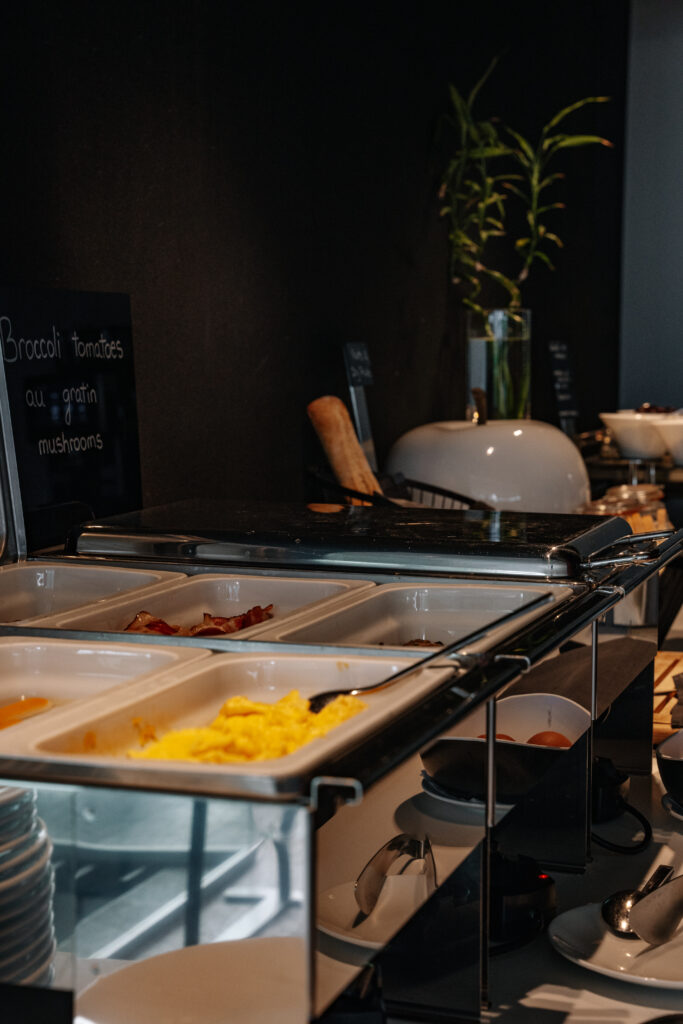
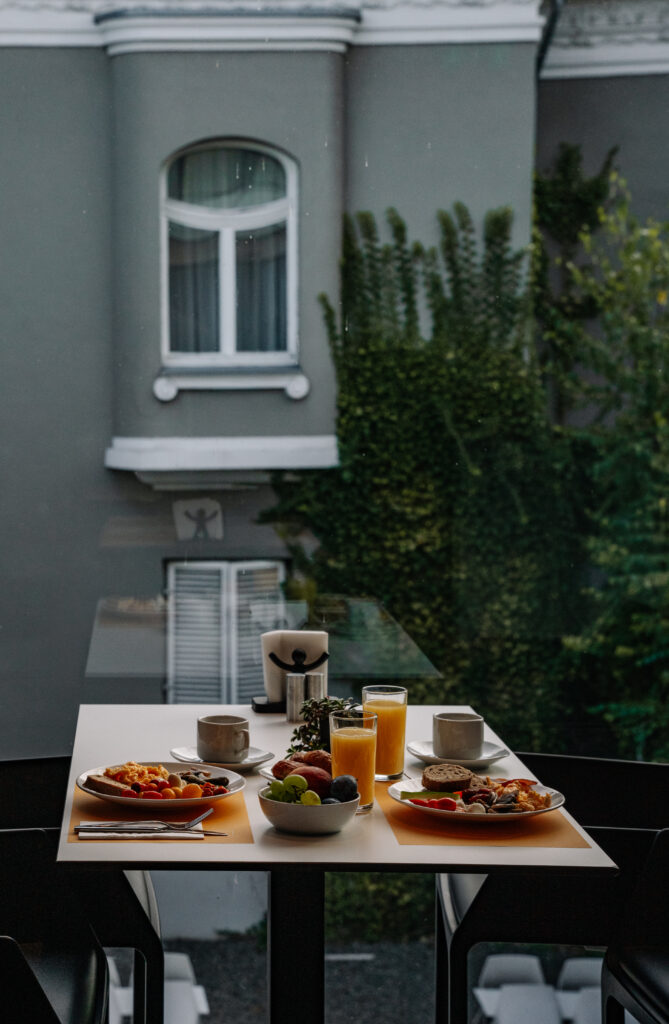
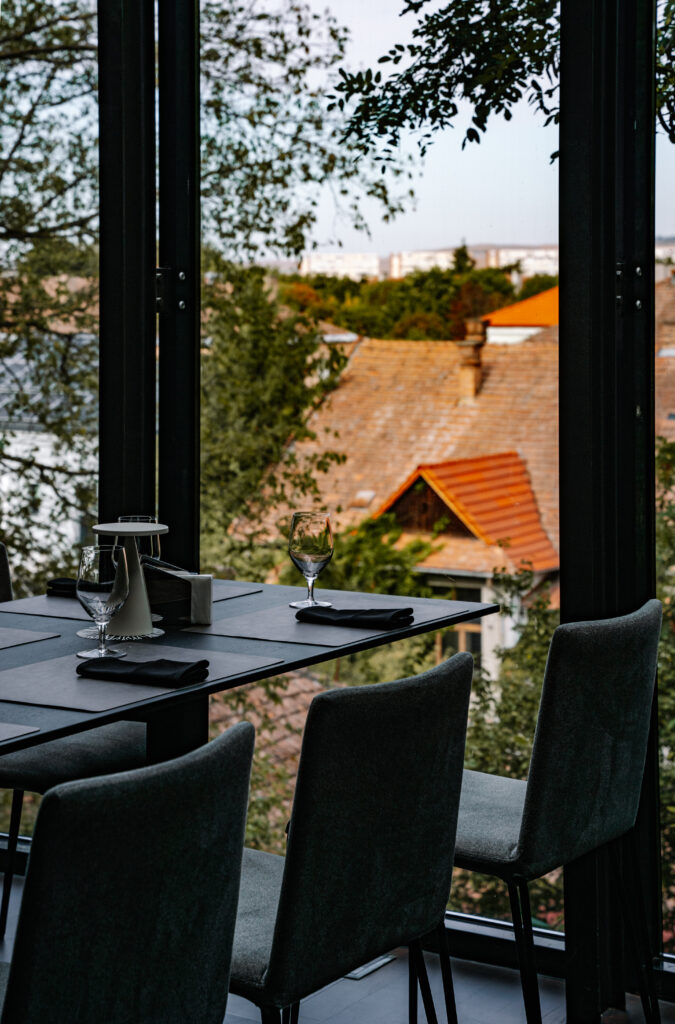
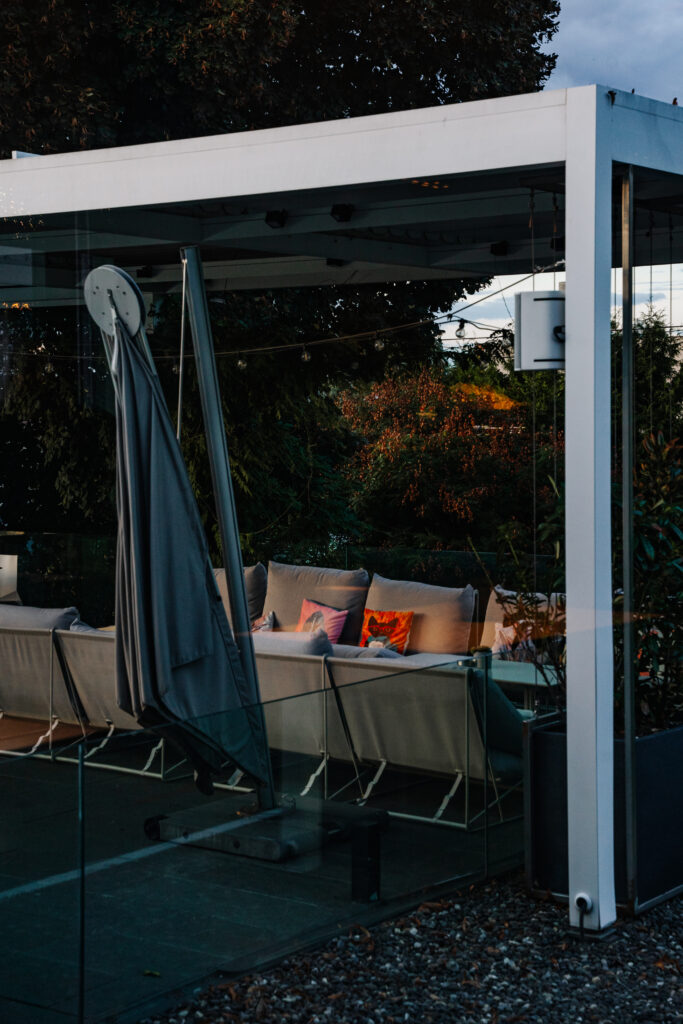
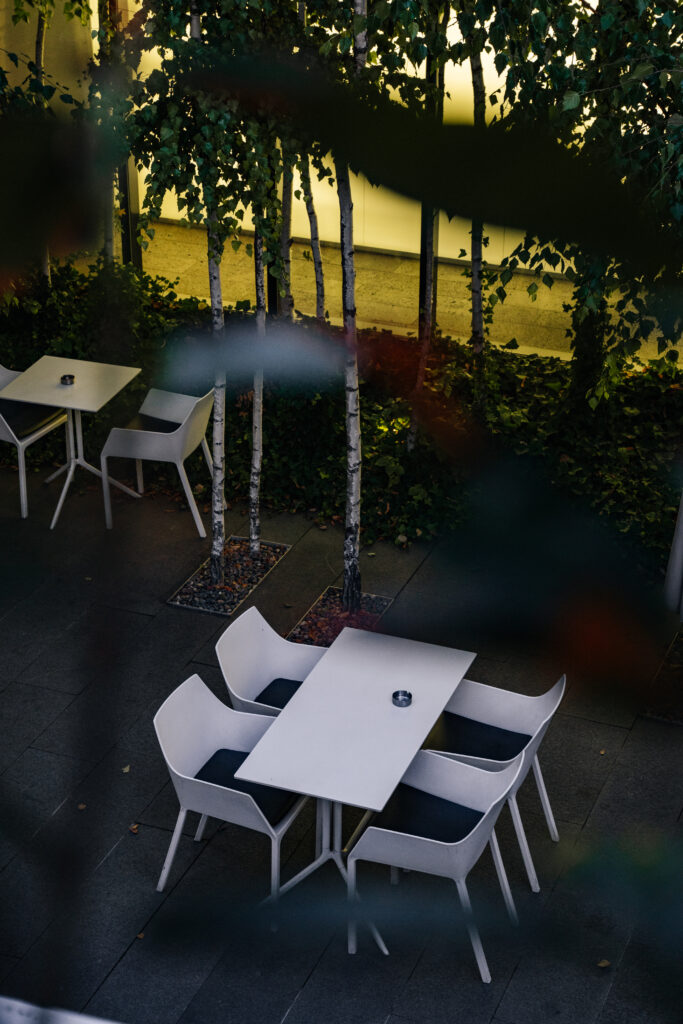
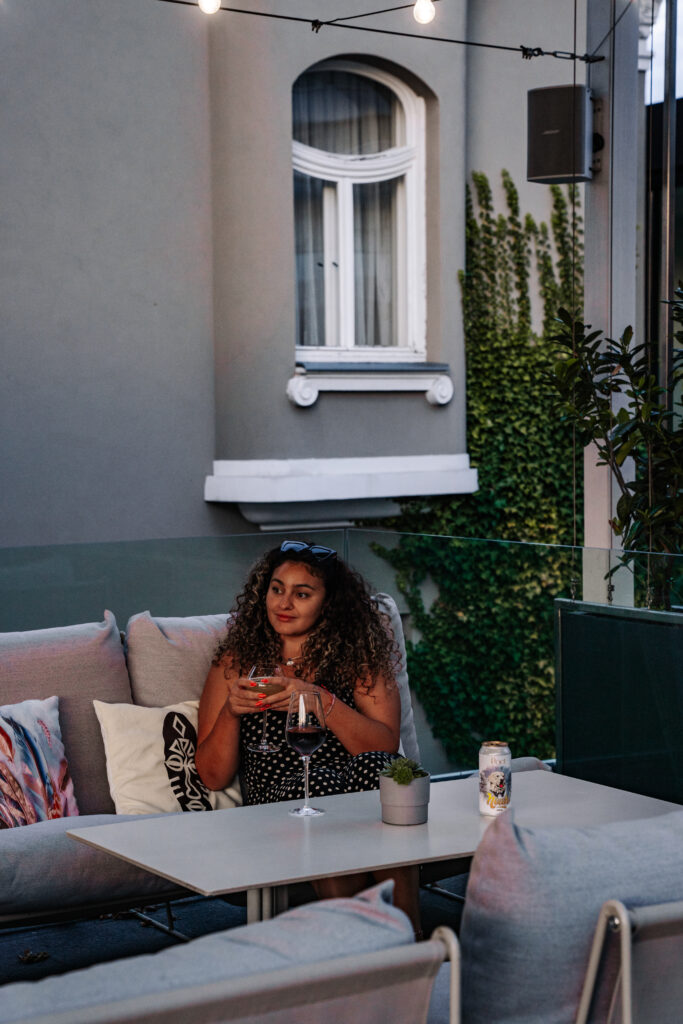
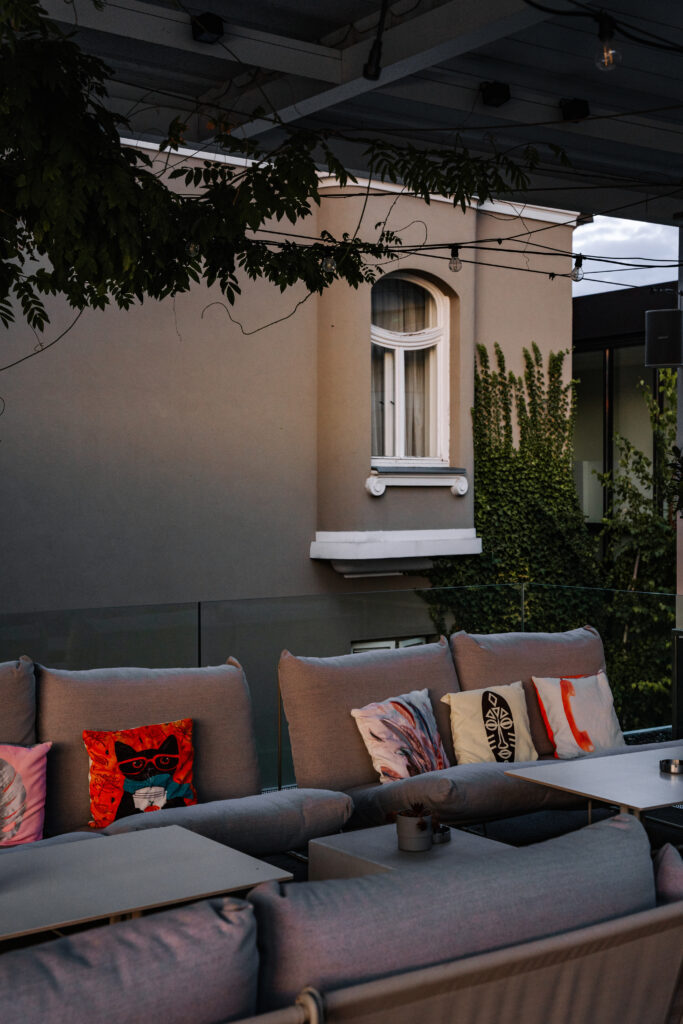
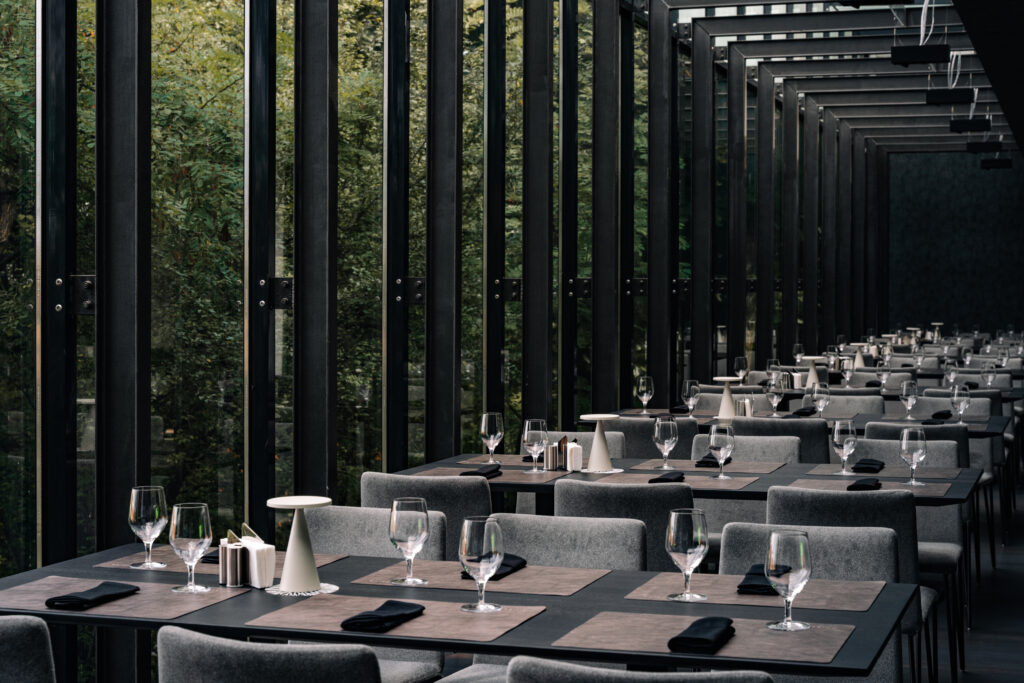
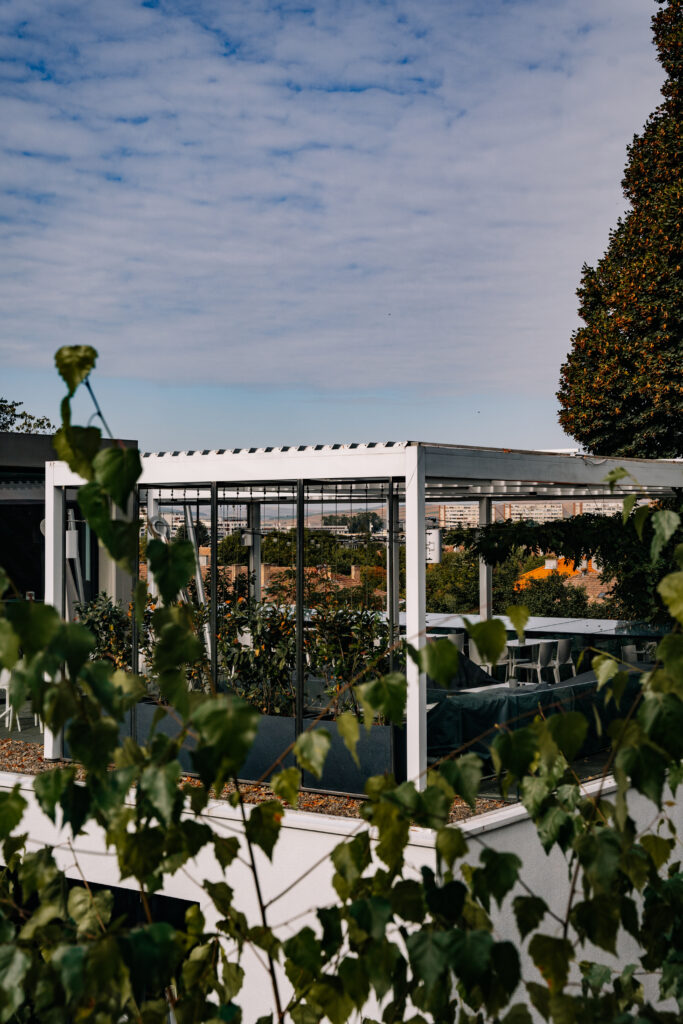
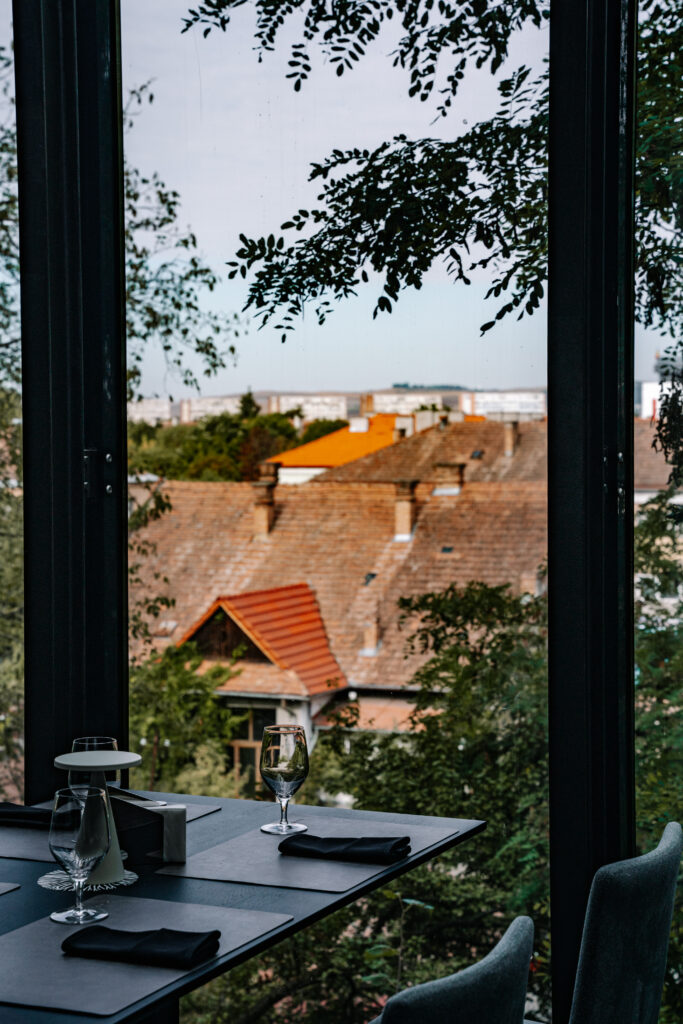
One of the most enjoyable moments of my stay was undoubtedly breakfast. And I have to say, it was absolutely delicious! It is served in the modern part of the hotel, in a bright, glass-filled space overlooking the historic villa. Breakfast is buffet-style, with delicious, fresh local produce replenished throughout the service. There is also a spacious restaurant with an impressive view, as well as a cosy outdoor terrace for those who enjoy spending their afternoons and evenings outside. Complete with soft cushions, comfortable sofas and lovely views, it is a perfect spot to unwind.
Practical Information – Location, Prices and Booking
Villa Csonka is located at 27 Gheorghe Doja Street in Târgu Mureș, Romania. It is a great location if you want to combine a hotel stay with exploring the city. The historic centre is within walking distance, and the Palace of Culture is approximately 1 km away. The railway station is also nearby, so you don't necessarily need to travel by car.
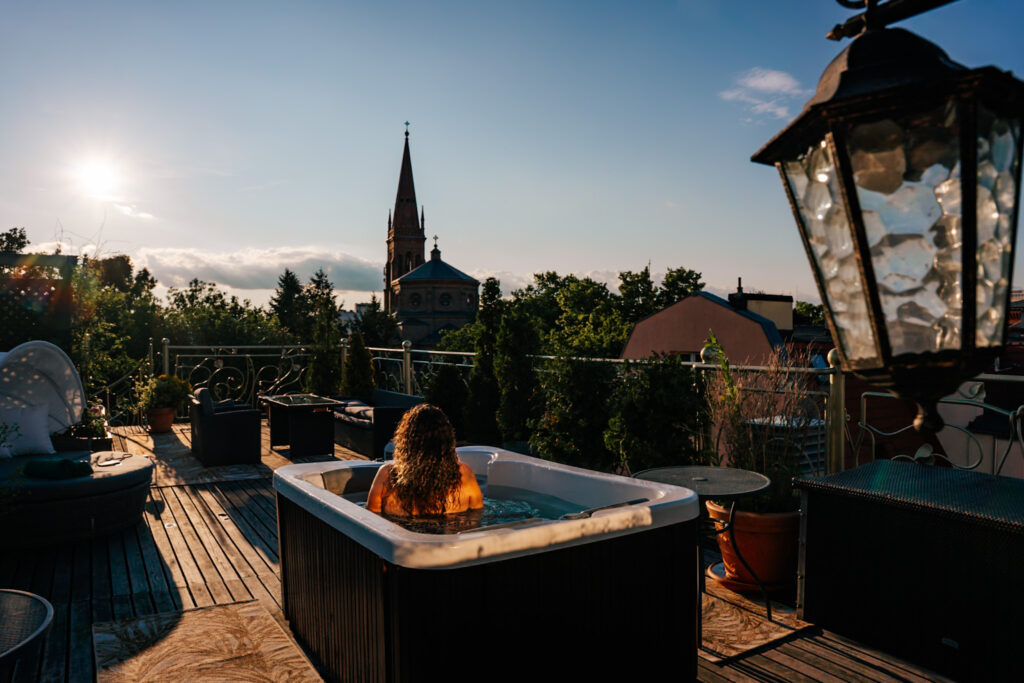
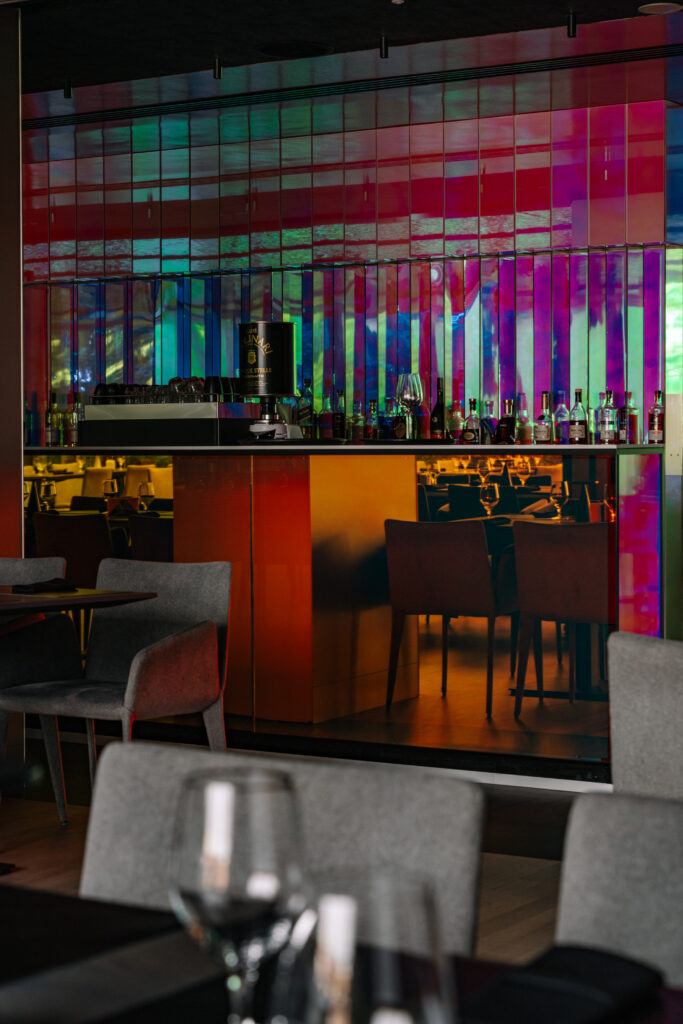
It is worth remembering that Villa Csonka is part of the Hotel Privo complex, which means guests staying in the historic villa can also enjoy the facilities available in the modern hotel building. These include a restaurant, bar, spa area, sauna, jacuzzi, gym and parking.
Essential Information Before Booking
- Adress: Strada Gheorghe Doja 27, 540354 Târgu Mureș, Rumunia.
- Getting there by car: the entrance to the hotel car park is located at Urcușului 1.
- Electric car charging: charging facilities are available in the underground garage.
- Airport: Târgu Mureș International Airport is approximately 13–15 km away.
- Parking: free on-site parking.
- Wi-Fi: Free.
- Check-in: from 2:00 PM.
- Check-in: to 12:00 PM.
- Breakfast: available at the hotel; check whether it is included in your chosen rate.
What are the rates?
Villa Csonka offers just six rooms and suites, so availability may be limited. Prices depend on the dates, room type, number of guests and whether breakfast is included in the booking.
You can book your stay directly through the hotel's website or via booking platforms:
My tip: If you're mainly interested in the historic interiors and period furniture, make sure to check when booking that you're choosing a room in Villa Csonka itself, rather than in the modern Hotel Privo building. These are two quite different accommodation experiences, even though they are part of the same complex.
I have to say, Villa Csonka is a fascinating stop on any trip through Transylvania, especially for those who appreciate architecture, history and hotels with character.